

1. The Evolution of Flavor Industry Marketing
The flavor industry has shifted dramatically in recent years, as digital marketing replaced many old-school approaches. For example, brands now use social platforms to showcase product stories and engage buyers directly. Additionally, AI‑driven insights help teams predict trends before competitors react. At the same time, rapid prototyping accelerates flavor development, allowing companies to test ideas with real users faster than ever before. Therefore, traditional marketing channels face new pressure to prove real value.
Meanwhile, these changes raise an important question for flavor brands: are trade shows still valuable in 2026? On one hand, digital tools create rich data and broad reach at low cost. On the other hand, trade shows offer face‑to‑face moments that digital channels cannot replicate easily. As a result, every brand must evaluate whether physical events align with its goals, budget, and audience needs in the current market.
2. What Is a Trade Show?
Definition of a Trade Show
A trade show is a business event where companies present products to industry buyers. In these venues, brands display innovations and meet decision-makers face to face. Moreover, attendees include distributors, manufacturers, and retail partners seeking new collaborations. Therefore, trade shows act as live marketplaces designed for focused industry interaction.
Trade shows differ from consumer fairs because they target professionals, not the general public. As a result, conversations tend to be technical and deal‑oriented. Additionally, vendors often use booths, sampling, and demos to educate buyers rapidly. Consequently, trade shows remain structured platforms for commercial discovery and deal initiation.
Trade Show for Flavor Brands vs. Expo, Conference, and Exhibition
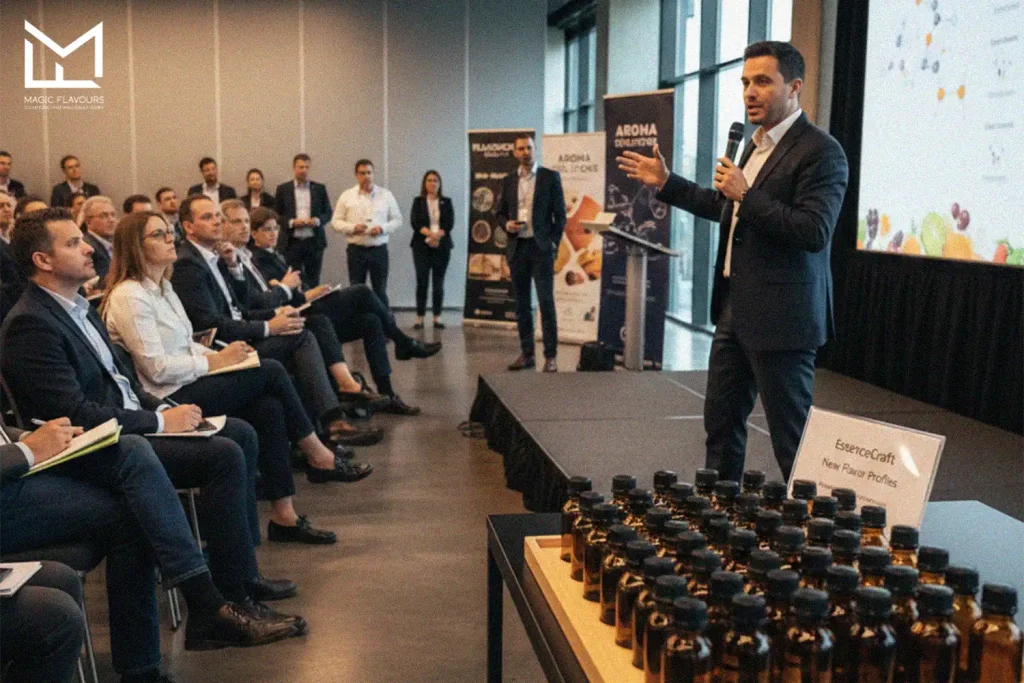
Trade shows differ from expos because expos tend to welcome broad audiences, including end consumers. In contrast, trade shows focus strictly on industry specialists and business transactions. Meanwhile, conferences emphasize education with sessions and speakers rather than product showcases. Therefore, trade shows balance displays with networking more than either type.
An exhibition may be broader than a trade show, often including cultural or public entertainment elements. However, flavor trade shows limit attendance to professionals with buying power. As a result, exhibitors benefit from interactions that have clear commercial intent. Thus, flavor trade shows serve specific B2B purposes better than general events.
The Importance of Trade Shows for Flavor Brands in B2B Marketing
Trade shows remain crucial for flavor brands because they create direct connection opportunities with buyers. In these settings, brands can demonstrate sensory profiles and answer questions instantly. Additionally, flavor decisions often depend on personal trust built through live interaction. Therefore, trade shows help shorten sales cycles in complex ingredient markets.
Furthermore, trade shows allow companies to benchmark innovation side by side with competitors. Consequently, marketers gather competitive data while buyers compare options efficiently. At the same time, brands can secure partnerships that might take months to develop online. As a result, trade shows complement digital strategies with tangible business outcomes.
3. How Trade Shows for Flavor Brands Are Organized?
Booth Design and Sampling Stations
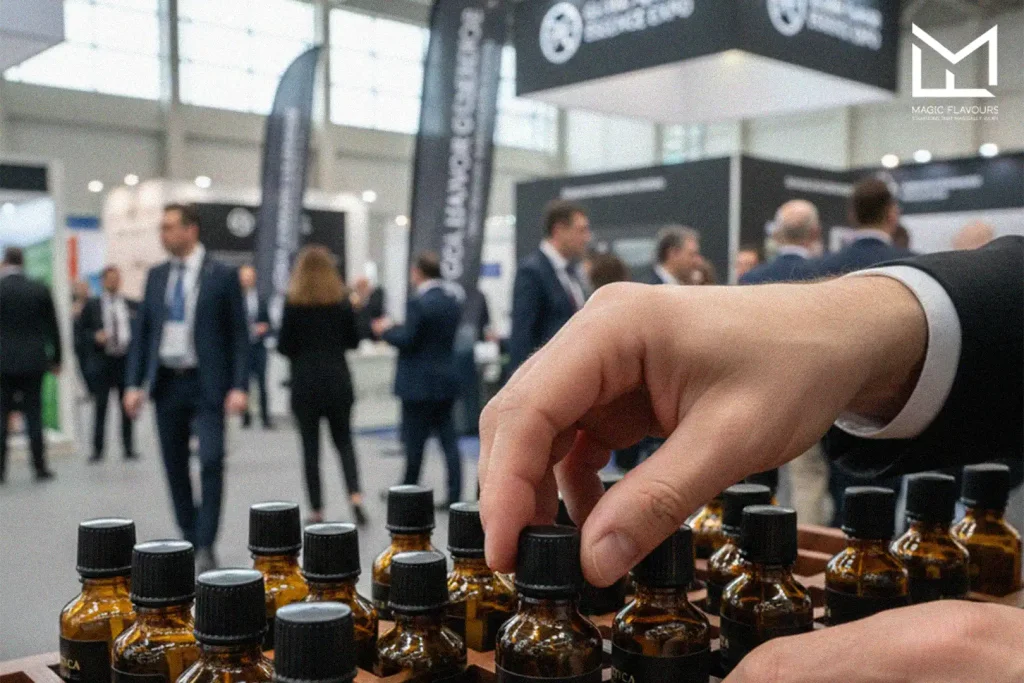
Booth design plays a key role in attracting visitors, as visually appealing setups draw more attention. Sampling stations let attendees taste flavors firsthand, enhancing sensory understanding. Additionally, interactive demos create memorable experiences, helping brands leave lasting impressions. Therefore, combining visuals, samples, and engagement encourages deeper interest from potential buyers.
Trade shows often use themed booths to highlight product categories. For example, sweet, fruity, or uncommon flavors may have separate zones. Moreover, guided tastings educate visitors on notes and balances. As a result, attendees remember flavors better and associate them with the brand.
B2B Sessions and Private Tastings
B2B sessions allow direct conversations between brand representatives and decision-makers. Meanwhile, private tastings provide controlled settings to discuss formulations confidentially. These interactions help buyers evaluate products in depth before committing. Consequently, personal engagement fosters trust and builds stronger business relationships.
Private tastings also let brands gather immediate feedback on prototypes. In addition, small sessions avoid public pressure, encouraging honest opinions. Therefore, B2B sessions complement public demonstrations by deepening connections and accelerating deals.
Innovation Trends Highlighted at Trade Shows for Flavor Brands
Trade shows showcase key trends like clean label ingredients, attracting health-conscious buyers. Natural extracts also gain attention, as demand grows for transparency. Meanwhile, functional flavors that offer added benefits appear increasingly popular. Therefore, trade shows position brands as trendsetters while educating attendees.
Exhibitors often present hybrid flavors combining natural extracts with functional benefits. Consequently, buyers see what innovations are market-ready and what is emerging. At the same time, trend highlights guide product development for new launches. Thus, trade shows remain critical for spotting and adopting innovation.
4. Why Trade Shows for Flavor Brands Are Critical for Emerging Brands
Establish Credibility Against Major Companies
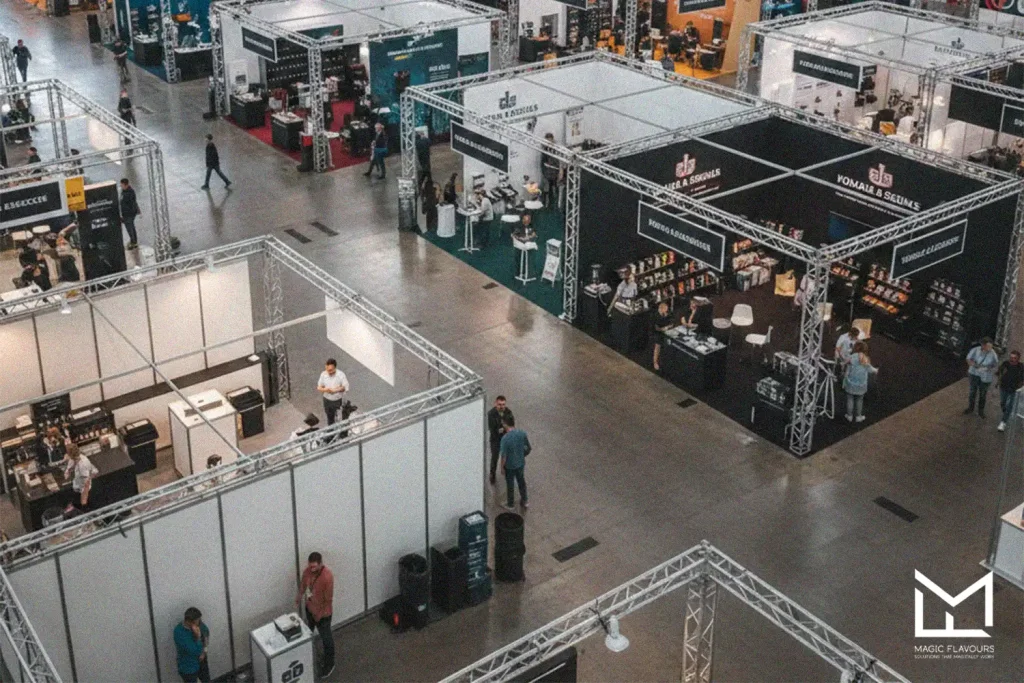
Emerging brands use trade shows to build trust early, as they share space with well-known competitors. Consequently, being present signals professionalism and seriousness to buyers. In addition, interactive demos let visitors experience the product firsthand. Therefore, credibility grows faster than through digital campaigns alone.
Trade shows also provide opportunities for media coverage and awards. Meanwhile, recognition from industry peers enhances brand reputation quickly. As a result, smaller companies can compete on perceived expertise and quality with established players.
Attract First Industrial Clients Through Trade Shows for Flavor Brands
Trade shows allow emerging brands to meet potential B2B clients face to face. Consequently, initial relationships develop faster than via emails or calls. In these sessions, buyers can taste samples and discuss technical details directly. Therefore, early adoption and loyalty are more achievable for new brands.
Additionally, trade shows provide a platform for demonstrating reliability and responsiveness. Meanwhile, personal interaction fosters trust, increasing the likelihood of first contracts. As a result, these events serve as a launchpad for industrial relationships.
Find Distributors or Co-Manufacturers
Trade shows help brands identify distributors and co-manufacturers efficiently. In turn, this expands market reach quickly and strategically. Moreover, live meetings allow negotiation of terms and testing collaboration potential. Consequently, emerging brands scale operations faster than relying solely on online channels.
By showcasing products in person, companies signal reliability to partners. At the same time, partners see quality firsthand, building confidence in the relationship. Therefore, trade shows are crucial for network expansion in competitive markets.
Receive Instant R&D Feedback
Trade shows let brands gather immediate feedback on prototypes and formulations. Consequently, product improvements can occur rapidly before full-scale production. Meanwhile, attendees often suggest tweaks that match market preferences. Therefore, live input accelerates the R&D cycle effectively.
Additionally, feedback helps prioritize flavor combinations or ingredient adjustments. In turn, brands save time and resources compared to trial-and-error methods. As a result, trade shows become real-time laboratories for innovation.
Shorten the Sales Cycle
Trade shows shorten the B2B sales cycle compared to online marketing channels. By engaging buyers directly, brands reduce back-and-forth communication. Moreover, tasting and demos convince clients faster than digital descriptions alone. Consequently, conversions happen more quickly and predictably.
Face-to-face interactions also allow immediate negotiations and decision-making. Meanwhile, trust established in person reduces hesitation and delays. Therefore, trade shows accelerate revenue generation for emerging flavor brands.
5. Top Trade Shows for Food & Beverage Flavors
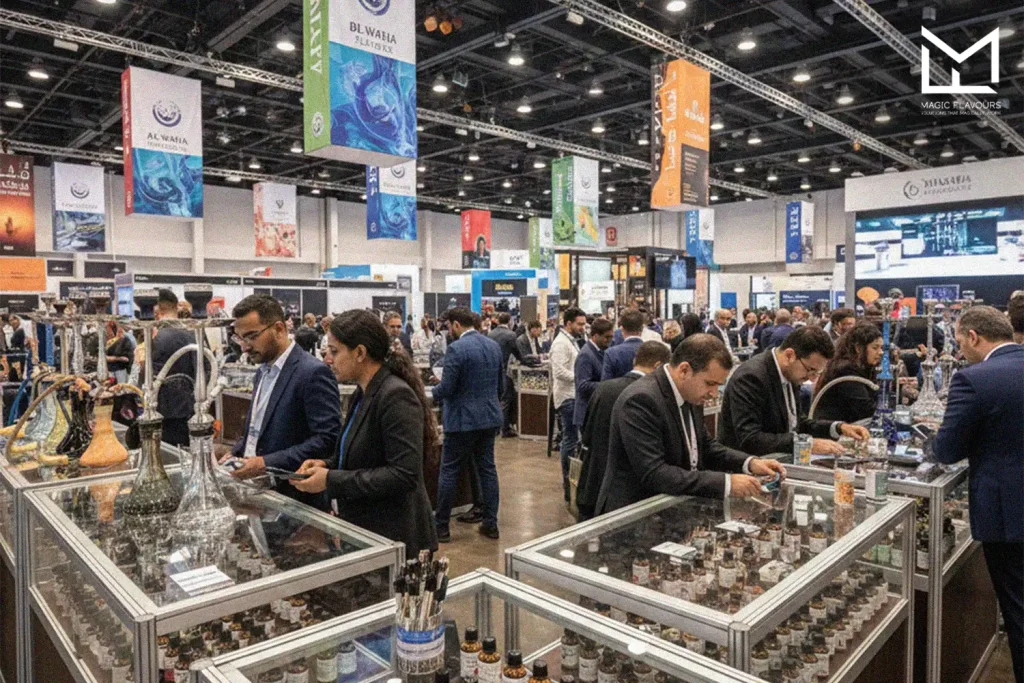
IFT FIRST (USA)
IFT FIRST is the premier annual food science and innovation expo in the United States, bringing together researchers, developers, and industry leaders under one roof. It focuses on breakthrough food technologies, ingredient innovations, and scientific advancements shaping the future of food.
At IFT FIRST, exhibitors showcase cutting‑edge solutions and emerging trends in flavors, processing, and sustainability, making it ideal for medium and large brands. Consequently, attendees leave with actionable insights and connections across the global food ecosystem.
Therefore, this event remains a key platform for flavor companies to benchmark innovations, engage specialists, and explore next‑generation science.
Gulfood Manufacturing (Dubai)
Gulfood Manufacturing is one of the world’s leading food and beverage sourcing and innovation trade shows, held annually in Dubai.
Importantly, this event acts as a gateway to the Middle East market, connecting global buyers with ingredient suppliers, co‑manufacturers, and technology partners.
Furthermore, Gulfood Manufacturing highlights functional flavors and processing trends that appeal to food formulators and industrial clients. As a result, brands targeting regional expansion or functional innovations find strong commercial opportunities here.
Anuga FoodTec (Germany)
Anuga FoodTec in Germany attracts a truly global industrial audience, bringing together suppliers and manufacturers across the entire food and beverage production chain.
Additionally, it offers extensive access to processing technology, packaging solutions, food safety systems, and ingredient innovations.
Therefore, flavor brands benefit from connecting with ingredient suppliers, machinery experts, and decision‑makers from major global companies, expanding their industrial network and technical insights.
Fi Europe (Europe)
Fi Europe, also known as Food Ingredients Europe, is one of the world’s leading events for food and beverage ingredients, held in Frankfurt and other major European cities.
This event highlights trends such as clean label, natural extracts, plant‑based and functional solutions, making it perfect for emerging brands focused on modern consumer demands.
Moreover, Fi Europe brings together thousands of ingredient suppliers, buyers, R&D experts, and product innovators, ensuring valuable connections for brands aiming to expand and innovate.
6. Key Changes in Trade Shows for Flavor Brands in 2026
Hybrid Event Formats
Hybrid trade shows combine physical presence with digital engagement, allowing brands to capture leads both onsite and online. Consequently, companies can reach a broader audience and maintain interactions beyond the event. Meanwhile, attendees unable to travel still participate through virtual booths and live streaming sessions. Therefore, hybrid formats enhance visibility while extending networking opportunities.
These setups also enable data collection from digital interactions, complementing traditional contact capture. As a result, brands can follow up efficiently and track engagement more accurately. Moreover, hybrid events reduce the risk of missed connections for global buyers. Consequently, this format is becoming standard for major flavor industry shows.
AI in Lead Qualification
AI tools now help trade shows automatically qualify leads, prioritizing prospects with higher conversion potential. Consequently, sales teams focus on buyers more likely to close deals. Meanwhile, predictive analytics assess engagement levels and suggest personalized follow-ups. Therefore, AI enhances efficiency and reduces wasted effort after the event.
Additionally, AI can segment contacts by interest, region, or purchasing power. As a result, targeted communication improves client response rates. Moreover, brands gain actionable insights from event data, allowing smarter decision-making for future marketing strategies.
Sustainability and Traceability Focus
In 2026, trade shows increasingly emphasize sustainability, highlighting responsible sourcing and eco-friendly production practices. Consequently, brands showcase natural extracts, clean-label solutions, and transparent supply chains. Meanwhile, attendees expect measurable environmental and ethical impact from products. Therefore, sustainability has become a core factor in brand credibility and networking.
Traceability tools also enable companies to track ingredients from origin to final flavor creation. As a result, buyers can make informed sourcing decisions. Additionally, sustainable practices often influence partnerships, making events key for aligning with conscientious clients.
Higher Booth Costs and ROI Tracking
Booth costs have risen due to demand for premium locations and advanced setups. Consequently, strategic planning is essential to ensure a strong return on investment. Meanwhile, brands increasingly track leads, interactions, and conversions to measure effectiveness. Therefore, participation decisions now rely heavily on ROI projections.
Moreover, advanced analytics tools allow companies to assess post-event performance accurately. As a result, trade show participation becomes a calculated investment rather than an exploratory expense. In turn, emerging and established brands alike must prioritize high-value shows carefully.
7. ROI Breakdown: Is It Really Worth the Investment?
Participating in trade shows for flavor brands involves multiple costs. Booth rental, design, and setup make up the largest expense. Additionally, travel, accommodation, samples, and staffing increase budgets quickly. Therefore, companies must plan carefully to avoid overspending.
Despite high costs, trade shows deliver significant benefits. Brands generate qualified leads, strengthen partnerships, and position themselves as industry innovators. Moreover, hands-on tasting and demonstrations create memorable experiences that digital channels cannot replicate. Consequently, trade shows remain a powerful marketing tool for both emerging and established brands.
Consider a sample ROI scenario: a medium flavor brand spends $25,000 on booth, travel, and samples. From this investment, it gains 15 high-value leads and three distribution agreements. Meanwhile, brand visibility improves through social media mentions and event coverage. As a result, the net benefit justifies the upfront cost when measured strategically.
8. Final Verdict: Are Trade Shows for Flavor Brands Worth It in 2026?

Trade shows remain essential for maintaining market position, as they demonstrate credibility and visibility in a competitive industry. Consequently, brands that skip events risk losing recognition and falling behind competitors. Meanwhile, strategic participation ensures resources target the most valuable shows, maximizing impact and minimizing unnecessary spending.
Before, during, and after the event, careful planning is crucial. Prior to the show, brands define goals, identify target clients, and design engaging booths. During the event, live demos, sampling, and B2B sessions build relationships and capture leads. Afterward, follow-ups, analysis, and feedback integration ensure leads convert and ROI improves.
Ultimately, trade shows in 2026 are most effective when integrated into a broader marketing strategy. By combining digital outreach, hybrid engagement, and in-person interaction, flavor brands can secure partnerships, enhance innovation visibility, and accelerate growth. Therefore, selective and strategic participation makes trade shows a worthwhile investment.
 English
 Arabic
 Turkish
 Persian