

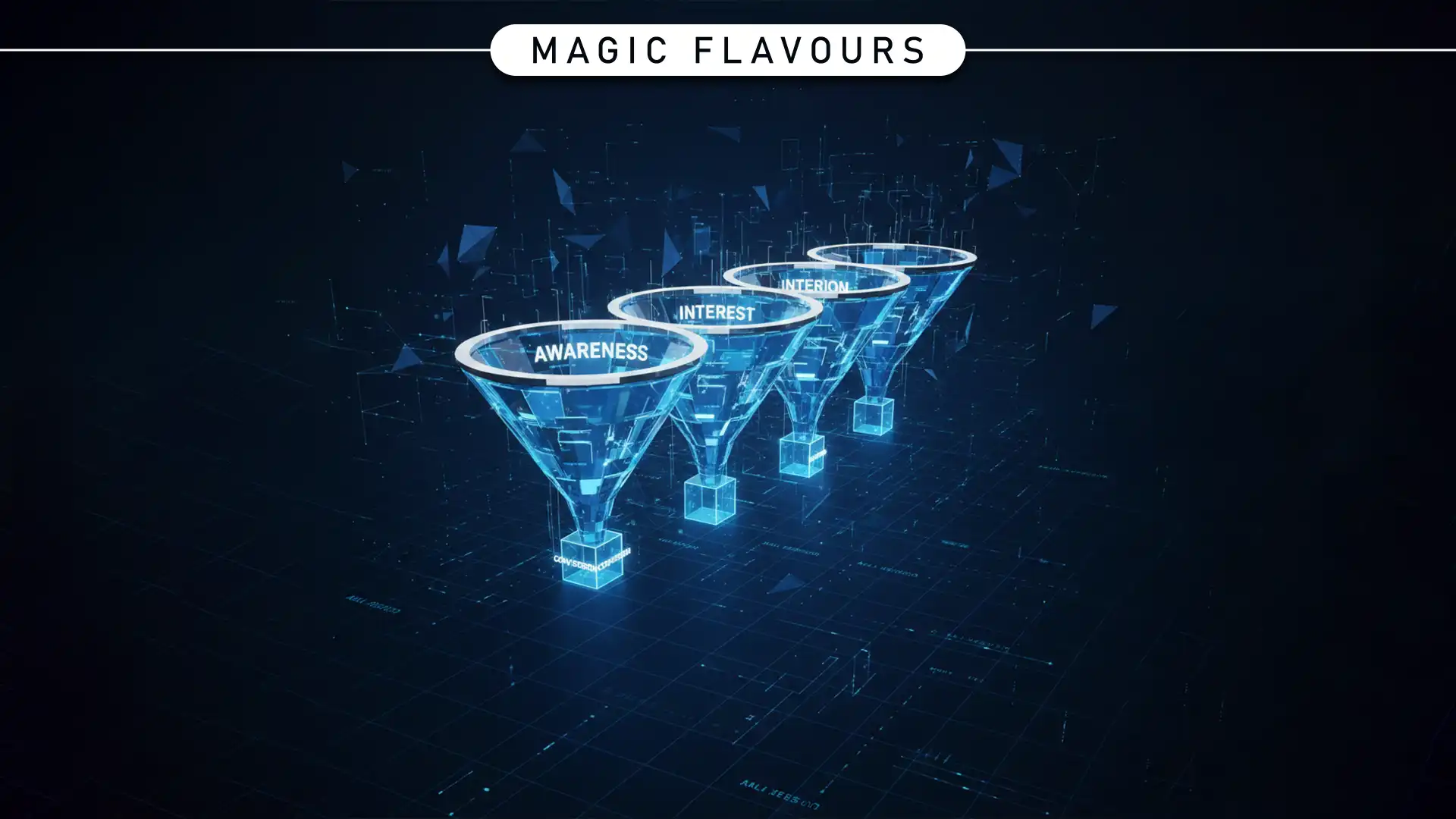
1. Overview of B2B Sales Funnel Strategy
Marketing builds awareness and attracts the right prospects to your business. Teams create targeted content, run campaigns, and use channels to educate potential buyers about solutions that solve real problems. This effort generates initial interest and brings qualified leads into the pipeline, setting the foundation for the entire revenue process.
The role of funnels in aligning marketing and sales teams stands out as a critical driver of success. Funnels offer a shared visual framework that defines clear stages from awareness to conversion and beyond. Marketing fills the top with high-quality leads; sales advances them through mid-to-bottom funnel. Aligned definitions, criteria, and handoffs reduce friction and improve collaboration.
A structured sales funnel strategy matters greatly for modern B2B businesses because, in today’s market, buyer journeys have grown more complex and, as a result, increasingly non-linear. Companies face longer sales cycles, multiple decision-makers, and heavy self-research by prospects. A clear, data-driven funnel helps identify bottlenecks, optimize each stage, and track performance with precision. This approach enables repeatable processes that scale growth, minimize wasted effort, and support predictable outcomes even in volatile markets.
Aligning marketing and sales creates predictable revenue by uniting both teams around shared goals and metrics. When departments collaborate closely, they nurture leads together, qualify opportunities more accurately, and shorten sales cycles significantly. Aligned organizations generate up to 208% more marketing-driven revenue and grow 19–24% faster than misaligned peers. This unity turns the funnel into a reliable engine that forecasts revenue with confidence and drives sustainable business expansion.
2. What Is a Sales Funnel and Why Is It Used?

A sales funnel serves as a visual model that maps the step-by-step journey a potential customer takes toward making a purchase. In B2B contexts, it represents how prospects move from initial awareness of a problem or your brand to becoming paying clients. Businesses use this framework to guide marketing and sales efforts, track progress, and identify where prospects drop off. The funnel shows many enter at the top through broad awareness activities, but few convert at the bottom after thorough evaluation and decision-making.
The sales funnel closely mirrors the customer’s journey from first contact to purchase. Prospects typically begin at the top (often called TOFU or awareness stage), where they discover your brand through content, ads, or referrals and recognize a business challenge. As they move downward, they show interest by engaging with educational resources, then enter consideration phases to compare solutions and assess value. In modern B2B environments, this path often includes multiple stakeholders, research, demos, and negotiations before reaching the bottom (BOFU or decision stage), where they commit to a purchase. Even after buying, many funnels now extend to retention and advocacy for long-term relationships.
Businesses rely on the sales funnel because it provides structure in complex B2B buying processes that involve longer cycles and higher stakes. It helps teams align strategies, nurture leads effectively at each stage, and optimize conversions for predictable revenue growth. By understanding how the funnel represents the real customer journey, companies spot bottlenecks, refine messaging, and deliver the right information at the right time to build trust and close deals more efficiently.
Why Businesses Use Sales Funnels
Businesses use sales funnels to turn raw attention into qualified demand that drives real revenue. Marketing efforts capture broad awareness through content, ads, and outreach, but without structure, most prospects never progress. A well-designed funnel filters and nurtures these initial contacts, educating them on problems and solutions while qualifying intent. This process transforms casual interest into high-value opportunities that sales teams can pursue effectively. In B2B, where buyers research extensively, funnels focus resources on prospects with genuine buying signals instead of unqualified leads.
Sales funnels replace random sales actions with managed customer journeys that align with how buyers actually decide. Prospects no longer face disjointed pitches or inconsistent experiences; instead, teams deliver tailored content and interactions at each stage. This structured approach reduces guesswork, shortens cycles by addressing objections early, and builds trust progressively. Companies manage the journey proactively, spotting drop-offs and adjusting tactics to keep momentum. The result is a more predictable path from first contact to close, especially valuable in complex B2B environments with multiple stakeholders.
Funnels improve conversion rates and sales efficiency by providing clear metrics and optimization opportunities. B2B benchmarks show overall funnel conversion rates typically range from 3% to 5%, with stage-specific rates varying—early stages often hit 25-35%, mid-stages mid-teens to twenties, and late stages 15-30%. Teams track these numbers to identify bottlenecks, refine messaging, and boost progression without increasing spend. This efficiency lowers customer acquisition costs, accelerates deal velocity, and scales revenue more reliably than ad-hoc efforts ever could.
Sales Funnel as a Strategic Framework
Businesses treat sales funnels as comprehensive systems rather than isolated tactics because they integrate marketing, sales, and customer success into one cohesive engine. A funnel operates as an ongoing framework that maps the entire buyer journey, aligns teams around shared stages and goals, and supports data-driven decisions across the organization. It evolves with market changes, incorporates buyer feedback, and extends beyond initial purchase to retention and advocacy. This systemic view creates repeatable processes that deliver consistent results, unlike short-term tactics that produce sporadic wins but lack long-term impact.
Having leads differs significantly from having a sales funnel because leads represent raw, unguided potential while a funnel provides the structured path to convert them. Leads alone offer volume without direction—many never qualify or engage meaningfully. A funnel adds qualification criteria, nurturing sequences, stage progression tracking, and handoff protocols that turn those leads into opportunities. Without this framework, teams chase unqualified prospects inefficiently; with it, they focus efforts where they matter most, improving quality, predictability, and revenue outcomes in B2B sales.
3. B2C vs B2B Sales Funnel Strategies
What is a B2C Sales Funnel?
A B2C sales funnel guides individual consumers through a quick path from awareness to purchase. Buyers often complete decisions in minutes, hours, or a few days because purchases involve lower stakes and simpler needs. Marketers focus on broad reach with eye-catching ads, social media, and promotions that spark immediate interest and drive fast conversions.
Emotion drives most B2C decisions as consumers respond to feelings, brand stories, convenience, and perceived personal value. Campaigns highlight excitement, urgency, or lifestyle benefits to create impulse buys or quick commitments. This emotional focus shortens the funnel dramatically compared to more analytical processes.
In B2C, a single decision-maker—usually the consumer themselves—controls the entire journey. No committees or approvals slow things down, so funnels prioritize seamless experiences like one-click checkout and mobile optimization. This simplicity boosts volume and speed in high-transaction environments.
How a B2B Sales Funnel Strategy Is Different
B2B sales funnels feature much longer and more complex journeys that often span months. Average cycles range from 60 to 120 days for typical deals, while enterprise transactions extend to 9-12 months or longer due to thorough evaluations. Prospects research deeply, compare options, and navigate internal processes before committing.
Buyers base B2B decisions on rational analysis and risk assessment rather than emotion. They prioritize ROI, efficiency gains, data-backed proof, and long-term impact on their business. Sales teams must address concerns like cost justification, integration risks, and measurable outcomes to build confidence and move deals forward.
Multiple stakeholders play key roles in B2B purchases, with 6-10 or more people involved on average, including executives, finance, IT, and end-users. Each brings unique priorities and veto power, so funnels require multi-threaded engagement, consensus-building, and tailored messaging across the group. This complexity demands structured nurturing and relationship focus throughout the extended cycle.
Key Considerations in B2B Sales Funnel Strategy
Trust and reliability form the foundation of successful B2B funnels because buyers invest significant resources and face career risks with wrong choices. Companies emphasize proven track records, client testimonials, case studies, and security assurances to establish credibility early and maintain it through every stage.
Technical validation becomes essential as prospects demand demos, proofs of concept, integrations checks, and performance data. Sales teams provide detailed evidence of how solutions fit existing systems, deliver promised results, and minimize disruption. This step often extends cycles but prevents later objections and builds stronger commitment.
Budget ownership and approval processes add layers of scrutiny in B2B environments. Finance teams review costs against ROI projections, while procurement handles negotiations and compliance. Effective funnels include clear value demonstrations, flexible pricing discussions, and support for internal advocacy to navigate these hurdles and secure final sign-offs efficiently.
4. Campaign-Based vs Always-On B2B Sales Funnel Strategy

What is Campaign-Based Sales Funnels
Campaign-based sales funnels focus on specific products, limited-time offers, or short-term objectives that demand concentrated effort. Teams launch targeted initiatives like product launches, seasonal promotions, or quarterly pushes with defined start and end dates, clear goals, and dedicated budgets. These funnels drive quick wins by creating urgency and directing resources toward immediate revenue opportunities. Marketers craft tailored messaging, ads, and landing pages to accelerate prospects through the stages rapidly. In B2B, such campaigns often tie to events, webinars, or new feature releases, generating spikes in leads and pipeline when timed well.
Always-On Sales Funnels
Always-on sales funnels support continuous sales activity by maintaining steady engagement across channels without fixed timelines. These systems keep the brand visible and nurturing prospects year-round through consistent touchpoints. Examples include ongoing email marketing sequences that deliver value and build relationships, event invitations for webinars or industry gatherings that educate and connect, and educational content like blogs, guides, and videos that attract and inform buyers over time. This approach builds long-term awareness, trust, and a predictable flow of inbound opportunities in complex B2B environments.
How Campaign Funnels Support a Long-Term B2B Sales Funnel Strategy
Campaign funnels act as powerful accelerators within a broader B2B strategy by injecting momentum into specific parts of the pipeline. They create short bursts of high-intent activity that fill gaps, test new messaging, or capitalize on market timing, pushing qualified leads forward faster. When integrated thoughtfully, these targeted efforts boost overall velocity and revenue without disrupting the core process.
Always-on funnels serve as the long-term growth engine by sustaining demand generation and relationship-building continuously. They provide a stable foundation of top-of-funnel traffic, nurture mid-stage prospects, and keep the brand top-of-mind during extended cycles. Together, campaign bursts amplify the steady always-on engine, creating balanced, scalable revenue growth that combines immediate impact with sustainable pipeline health.
5. B2B Sales Funnel Stages Explained
Awareness
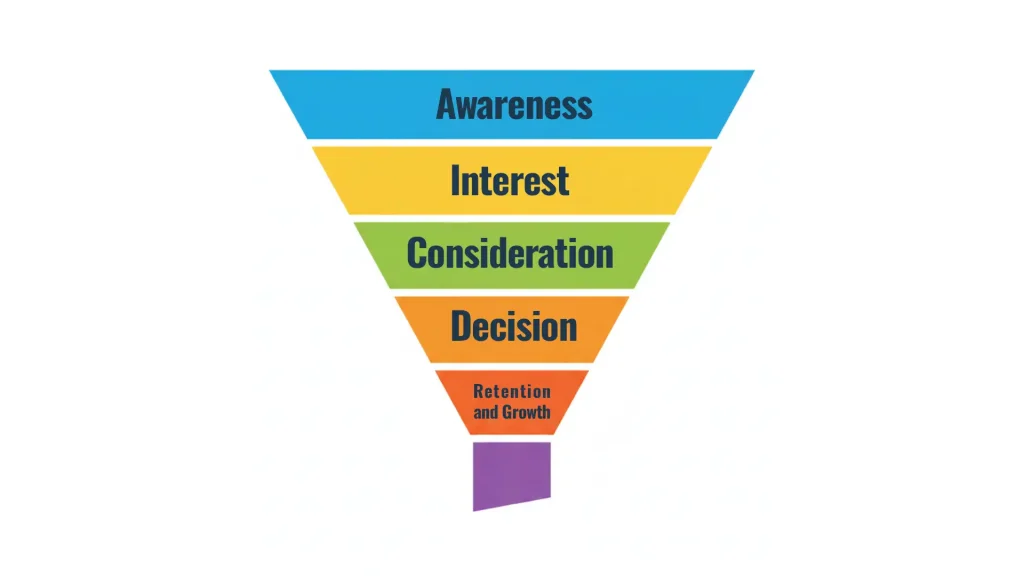
The awareness stage focuses on market education and brand visibility to reach potential buyers who recognize a business challenge but may not know your solution yet. Prospects often search independently for information, completing much of their early research digitally before any vendor contact. Marketers prioritize broad content distribution, SEO-optimized resources, thought leadership articles, and targeted ads to position the brand as knowledgeable and relevant in the industry. Industry content plays a central role here, including blogs, whitepapers, webinars, podcasts, and social media posts that address common pain points without heavy selling. Outreach efforts like LinkedIn prospecting, email sequences, and paid campaigns build initial visibility. Events such as virtual conferences, trade shows, and industry meetups create opportunities for face-to-face connections and networking that amplify brand presence in competitive B2B spaces.
Interest
In the interest stage, prospects show initial engagement by interacting more deeply with your brand and seeking information that matches their specific needs. They download gated content, subscribe to newsletters, attend webinars, or respond to outreach, signaling growing curiosity about how your offerings address their problems. This phase shifts from broad awareness to targeted nurturing that keeps them engaged. Information exchange and qualification happen actively as teams deliver educational materials like case studies, comparison guides, and personalized demos while assessing fit through lead scoring and basic questions. Marketing qualifies leads based on engagement signals and behavior, passing warmer prospects to sales for deeper conversations. This stage builds momentum by providing value and confirming mutual interest before advancing further.
Consideration
The consideration stage involves deeper evaluation where prospects actively compare solutions and weigh options against their requirements. Buyers seek details, evaluate features, and discuss fit—moving from interest to serious value and alignment assessment.
Initial engagement and qualification intensify here with sales-led discovery calls, customized proposals, and early technical discussions that address integration, scalability, and specific use cases. Teams exchange in-depth data, share ROI calculations, and conduct preliminary demos or proofs of concept. This phase focuses on overcoming objections, demonstrating expertise, and positioning your solution as the strongest contender among alternatives.
Decision
During the decision stage, prospects conduct thorough product evaluation and supplier comparison to finalize their choice. They review pricing, contracts, references, and competitors while engaging key stakeholders to reach consensus on the highest-value, lowest-risk option.
Sampling, testing, and internal alignment grow critical as buyers request trials, pilots, or proofs of concept to validate real-world performance. Teams support these efforts with technical resources, success stories, and negotiation support to facilitate approvals. Internal discussions center on budget, risk mitigation, and long-term impact, requiring persistent relationship-building to gain commitment and close deals.
Retention and Growth
The retention and growth stage extends the funnel beyond initial purchase to foster long-term loyalty and expand account value. Companies shift focus to onboarding, ongoing support, and proactive relationship management that ensures customers achieve expected outcomes and remain satisfied.
Account development involves regular check-ins, success reviews, and strategic planning to identify new opportunities within the existing client base. Teams drive repeat purchases through renewals, pursue cross-selling of complementary solutions, and recommend upselling to higher-tier plans or additional features. This approach turns customers into advocates, generates referrals, and creates a sustainable revenue stream through expanded lifetime value.
6. How B2B Sales Funnel Strategy Changes Based on Business Goals
Different Business Goals, Different Funnel Designs
B2B companies design their sales funnels differently depending on whether the primary goal centers on fast conversion or long-term nurturing. Businesses chasing rapid revenue growth—such as startups in competitive markets or those launching new products—build shorter, high-velocity funnels with strong calls-to-action, limited-time offers, and streamlined qualification. These designs prioritize quick wins, aggressive outreach, and immediate demos to close deals within weeks or a few months. In contrast, enterprises focused on complex, high-value solutions emphasize long-term nurturing. Their funnels stretch over 6–18 months, layering educational content, relationship-building touchpoints, and gradual consensus development to reduce perceived risk and foster deep trust before purchase.
The balance between acquiring new customers and expanding existing accounts also shapes funnel design significantly. New-customer-focused funnels invest heavily in top-of-funnel activities like SEO, paid ads, webinars, and cold outreach to generate a steady flow of fresh leads. These structures emphasize broad awareness and efficient lead scoring to identify high-potential prospects quickly. Account-based or expansion-focused funnels, however, shift resources toward mid- and bottom-funnel activities for current clients. They prioritize personalized success plans, regular value reviews, cross-sell roadmaps, and dedicated customer success teams to drive renewals, upsells, and referrals, turning one-time buyers into long-term, high-LTV relationships.
Adjusting Tactics at Each Stage
Companies adapt tactics at each funnel stage based on whether they lean toward content-driven or sales-driven approaches. Content-driven funnels rely on educational assets—blogs, whitepapers, case studies, videos, and interactive tools—to attract and guide prospects autonomously through early and middle stages. This method suits goals centered on thought leadership, brand authority, and inbound demand, allowing prospects to self-educate while marketing qualifies intent through engagement signals. Sales-driven funnels, by comparison, accelerate progression with proactive outreach, personalized demos, discovery calls, and direct objection handling from the interest stage onward. This tactic fits aggressive growth targets or high-ticket deals where human expertise closes faster than self-guided journeys.
The choice between automation-led and human-led interactions further refines stage-specific tactics. Automation-led funnels use sequences, lead scoring, chatbots, email drips, and triggered workflows to scale nurturing and qualification efficiently, especially at the top and middle stages. This approach supports high-volume goals and consistent follow-up without proportional headcount growth. Human-led interactions dominate in consideration and decision stages for complex B2B sales, where account executives conduct tailored consultations, negotiate terms, build executive relationships, and navigate multi-stakeholder dynamics. Many modern strategies blend both: automation handles volume and consistency while human touch delivers high-impact personalization where it matters most for conversion and retention.
7. A Practical Guide to Build a B2B Sales Funnel Strategy for

Businesses
This guide offers a step-by-step framework to design, implement, and optimize a B2B sales funnel aligned with modern buyer behavior. In 2026, successful funnels emphasize buyer-centric mapping, multi-stakeholder engagement, data-driven refinement, and seamless marketing-sales alignment to drive predictable revenue growth. Follow these structured steps to create a high-performing system tailored to your business.
Step 1: Define Your Target Market and Buying Roles
Start by identifying the industries, applications, and market segments where your product delivers the highest value and solves critical challenges most effectively. Focus on segments with strong demand signals, such as those facing regulatory pressures, supply chain disruptions, or efficiency demands, to concentrate resources on high-potential opportunities. This precision ensures marketing and sales efforts target accounts with the greatest likelihood of conversion and long-term fit.
Next, determine the core problems or needs your product addresses, including cost reduction, quality enhancement, operational efficiency, or competitive differentiation. Map key decision-makers and influencers across the buying committee—typically 6–10 stakeholders in modern B2B purchases—including technical teams, R&D, procurement, quality assurance, finance, and executive sponsors. Understand their evaluation criteria, approval workflows, testing protocols, and risk concerns to tailor messaging and interactions that resonate with each role throughout the journey.
Step 2: Position Your Product Within the B2B Sales Funnel Strategy
Identify where your product enters the customer journey—discovery, replacement, or optimization—to shape targeted entry tactics and content. This insight guides how aggressively you pursue awareness versus deeper nurturing from the outset.
Define the strategic role of samples, demos, and trials in building interest and demonstrating tangible value early. Clarify your core value proposition and key messaging for each funnel stage: educational insights for awareness, proof of ROI and fit during evaluation, and risk-mitigated business cases for decision-making. Consistent, stage-specific positioning accelerates progression and reduces objections in complex B2B cycles.
Step 3: Align B2B Sales Funnel Strategy Stages With Buyer Activities
Awareness Stage
Introduce your product with practical insights, real-world case studies, trend reports, and innovative solutions that address emerging challenges and opportunities. Deliver content that educates without overt selling to establish thought leadership and capture attention among prospects researching independently.
Interest Stage
Engage decision-makers with targeted samples, interactive demos, and detailed technical information that addresses specific pain points. Provide value-driven resources to spark curiosity, qualify intent, and initiate meaningful conversations while building initial trust.
Consideration Stage
Support rigorous testing, internal evaluations, and side-by-side product comparisons with comprehensive technical documentation, commercial proposals, integration guides, and performance data. Facilitate multi-stakeholder alignment by offering evidence that mitigates risks and proves superior outcomes.
Decision Stage
Streamline final approvals, negotiations, and ordering with transparent pricing, clear steps, compliance details, and strong executive business cases. Therefore, address last-minute concerns to ultimately secure commitment more efficiently.
Retention & Growth Stage
Sustain and expand client relationships through dedicated ongoing support, proactive product updates, performance reviews, and strategic account planning. Identify opportunities for repeat purchases, cross-selling complementary solutions, and upselling advanced features to maximize lifetime value.
Step 4: Develop Content, Touchpoints, and Campaign Logic
Create blogs, whitepapers, webinars, and reports to educate prospects, build trust, and attract them organically in early funnel stages. Focus on solving problems and sharing insights that position your brand as a reliable partner. Develop robust technical and commercial assets for mid- and late-funnel stages, including product samples, live demos, in-depth guides, technical specifications, ROI calculators, and customized proposals. These materials provide the proof and clarity buyers need during evaluation and decision phases.
Therefore, customize messaging and campaigns according to customer needs, specific purchase scenarios, seasonal trends, or market opportunities. Use personalized sequences across email, LinkedIn, events, and direct outreach to maintain relevance and momentum throughout the extended B2B journey.
Step 5: Execute, Automate, and Optimize Your B2B Sales Funnel Strategy
Implement marketing and sales automation tools to manage consistent follow-ups, lead nurturing sequences, engagement tracking, and timely handoffs between teams. Platforms that support workflows, scoring, and personalization therefore scale efforts efficiently while ensuring no opportunity slips through the cracks.
Track essential funnel metrics—including stage-specific conversion rates (typically 3–5% overall in B2B, with early stages at 25–35% and late stages at 15–30%), engagement levels, sales velocity, and buyer feedback—to measure performance and identify bottlenecks. Regular analysis reveals where prospects stall or accelerate.
Continuously refine tactics based on data-driven insights and direct customer input. Optimize messaging, sampling, campaign timing, content formats, and touchpoint frequency to boost conversions, shorten sales cycles, and maximize revenue in 2026.
8. Conclusion
A well-designed B2B sales funnel strategy, first and foremost, transforms the inherent complexity of modern buying journeys into a structured and predictable path that drives consistent revenue growth. In today’s environment—where prospects increasingly conduct extensive self-research, typically involve 6–10 stakeholders, and often take 3–12 months or longer to reach a decision—random or siloed sales efforts, by contrast, rarely succeed. Instead, a thoughtfully built funnel maps every stage to real buyer behaviors, while simultaneously aligning marketing and sales around shared goals and performance metrics. As a result, it provides clear visibility into progress, bottlenecks, and emerging opportunities. This clarity helps teams nurture leads effectively, qualify opportunities accurately, shorten sales cycles, and close high-value deals confidently.
The result is scalable, repeatable revenue that businesses can forecast and grow reliably. Target high-intent prospects, deliver stage-specific content and touchpoints, and optimize with data to cut acquisition costs, lift conversions, and maximize lifetime value. A strategic B2B sales funnel converts chaotic multi-threaded buying into an efficient revenue engine for sustainable growth and lasting success.
 English
 Arabic
 Turkish
 Persian