

Food grade flavor certification ensures that flavors meet rigorous safety and quality standards. Specifically, companies must follow precise regulations to guarantee their products are safe for consumption. Consequently, this certification builds trust with clients and significantly strengthens brand credibility on a global scale.
Furthermore, by achieving such certification, manufacturers demonstrate compliance with key frameworks like HACCP principles, ISO 22000 food safety management systems, and relevant natural flavor guidelines (e.g., FDA GRAS standards or equivalent international requirements). As a result, it not only minimizes risks of contamination or regulatory violations but also enhances market access, customer confidence, and competitive positioning in the food and beverage industry.
Understanding how to get flavor certification is essential for producers. It involves complying with international standards and local laws. Moreover, businesses benefit from knowing differences between ISO 22000 vs HACCP, which guide food safety management. Natural flavor certification rules also play a critical role in verifying authenticity and purity.
1. What Is Food Grade Flavor Certification?
Food Grade Flavor Certification Requirements
Food grade flavor certification ensures flavors meet safety standards beyond basic edibility. Regulators check for contamination, allergen management, and chemical residues. Companies also must document production processes to maintain consistency and traceability. Moreover, quality audits verify compliance with strict hygiene and storage rules.
Global bodies set certification rules to unify safety expectations. Organizations like the FDA, EFSA, and JECFA provide guidelines on permissible ingredients. ISO 22000 vs HACCP frameworks guide companies in implementing systematic food safety management. Following natural flavor certification rules helps producers validate the authenticity and purity of plant-based or natural extracts.
Legal vs. Voluntary Certification Paths
Some certifications are mandatory in specific regions. In the US, the FDA enforces GRAS approval, while the EU requires flavoring regulations under EFSA. Asian countries often follow local food safety laws with mandatory documentation. Companies must navigate these legal pathways to sell internationally.
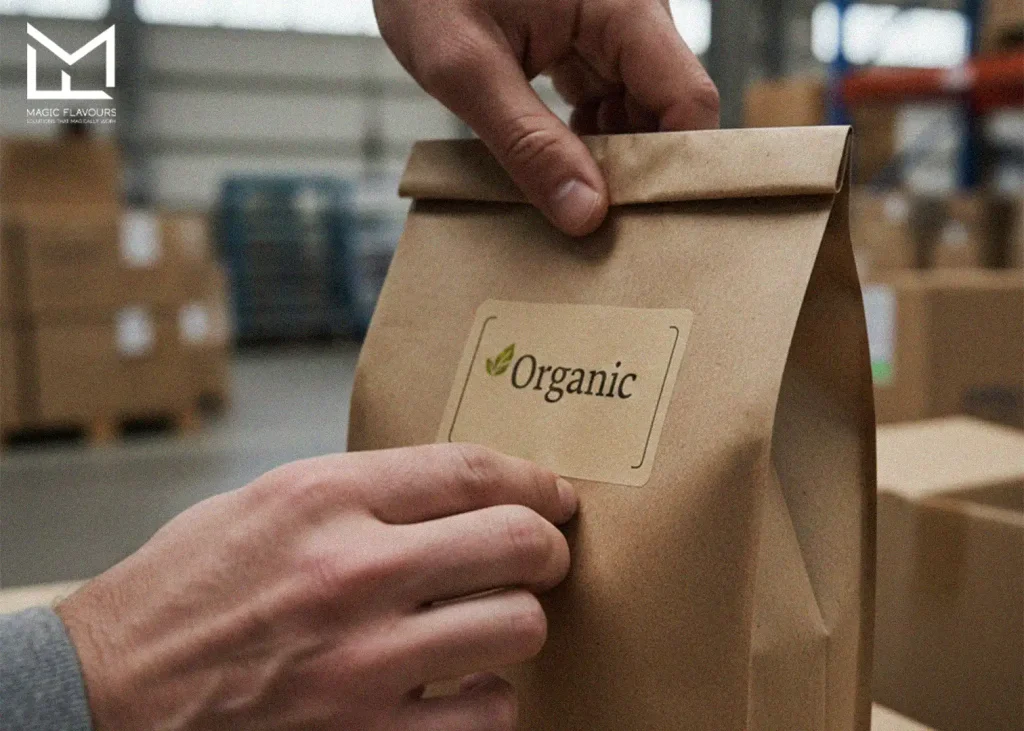
Voluntary certifications, however, build extra trust with clients. Labels like organic, kosher, or non-GMO signal quality commitment. They complement mandatory standards and help businesses differentiate products in competitive markets. Using recognized food grade flavor certification improves brand credibility and consumer confidence.
2. 5 Global Certifications for Flavor Manufacturers
FEMA GRAS Certification Explained
FEMA GRAS certification verifies that flavor ingredients are generally recognized as safe. The FEMA Expert Panel evaluates scientific studies, toxicology data, and consumption history. They also consider processing methods and potential allergen risks.
The GRAS list updates frequently. In 2026, several synthetic and natural flavors were added or revised. These changes affect how companies apply for food grade flavor certification and maintain compliance with global markets. Staying informed ensures safe product launches.
ISO 22000 + HACCP: Dual Protection for Food Safety
ISO 22000 sets comprehensive food safety management systems for flavor manufacturers. It helps companies systematically manage hazards and maintain compliance. Integrating HACCP enhances protection by identifying critical control points.
Using both frameworks ensures full food grade flavor certification. Companies benefit from rigorous documentation, risk management, and international recognition. ISO 22000 vs HACCP synergy strengthens client confidence and regulatory compliance.
1. EU Food Grade Flavor Certification Process
EFSA oversees approval of flavor substances in the European Union. Companies submit detailed dossiers on safety, composition, and exposure. EFSA evaluates each ingredient and issues scientific opinions for approval.
The EU Community List separates approved and restricted ingredients. Manufacturers must ensure their flavors match approved substances. Natural flavor certification rules also guide labeling and usage limits.
2. Halal and Kosher Certification
Halal certification requires flavors to follow Islamic dietary laws. Manufacturers must avoid prohibited ingredients and ensure clean processing methods. Certification bodies conduct audits and verify supply chains.
Kosher certification focuses on compliance with Jewish dietary rules. Companies must segregate equipment, maintain proper labeling, and document ingredient sources. Both certifications boost consumer trust globally.
Organic Certification: When “Natural” Isn’t Enough
Organic food grade flavor certification ensures ingredients meet strict farming and processing rules. Labels confirm no synthetic pesticides, GMOs, or prohibited additives.
USDA organic and EU organic rules differ. The US emphasizes farm-to-market traceability, while the EU adds stricter limits on extraction methods. Following these standards strengthens brand credibility for natural and organic products.
3. Benefits of Obtaining Food Grade Flavor Certification

Food Grade Flavor Certification Builds Trust
Food grade flavor certification signals quality and safety to buyers. Clients recognize certified flavors as reliable and consistent. This credibility strengthens long-term business relationships and enhances brand reputation.
1. Buyer Preference Data: Certified Suppliers Win
Studies show buyers prefer suppliers with verified certifications. Certified suppliers often receive priority in procurement decisions. They stand out in competitive markets because certification proves adherence to international standards.
2. Real Contract Wins Through Food Grade Certification
Companies with certification frequently secure high-value contracts. Brands trust certified flavors for new product launches and global distribution. Certification can directly increase sales and expand market reach.
Risk Reduction for Manufacturers
Certification reduces operational and safety risks. It ensures proper documentation, safe processes, and compliance with legal regulations. This minimizes recalls, contamination issues, and reputational damage.
Legal Protection with Food Grade Flavor Certification
Food grade flavor certification protects manufacturers legally. Proper certification demonstrates due diligence if regulatory authorities review products. It also helps avoid penalties in multiple markets.
Lower Insurance Costs for Certified Makers
Certified flavor manufacturers often qualify for lower insurance premiums. Insurance providers see less risk when companies follow ISO 22000 vs HACCP standards. Certification signals responsible operations and reduces liability exposure.
4. Food Grade Flavor Certification Process
Step 1: Source Certified Raw Materials
Sourcing certified raw materials is the foundation of food grade flavor certification. Using approved ingredients ensures safety, consistency, and regulatory compliance.
Supplier Audit Checklist
Auditing suppliers helps verify quality and authenticity. Check certifications, production methods, storage conditions, and transport protocols. Following a thorough checklist ensures you meet natural flavor certification rules.
Traceability Documentation
Maintain complete traceability records for all raw materials. Document batch numbers, supplier information, and shipping details. Traceability strengthens compliance and simplifies audits.
Step 2: In-House Quality Testing
Testing flavors in-house ensures consistency and safety before certification. Internal labs identify contaminants and verify ingredient composition.
1. GC-MS Testing Frequency
Use GC-MS testing regularly to detect impurities or flavor deviations. Specifically, monthly or batch-based testing helps maintain food grade flavor certification. Moreover, document all results to support compliance audits.
In addition, GC-MS (Gas Chromatography-Mass Spectrometry) provides highly sensitive and specific identification of volatile compounds, off-notes, and potential contaminants that simpler methods might miss. Therefore, consistent testing ensures early detection of issues such as residual solvents, unintended by-products, or variations in raw material profiles.
As a result, thorough documentation of GC-MS data—including chromatograms, mass spectra, retention times, and interpretation notes—creates a strong, defensible record for regulatory bodies, third-party auditors, and customers. Consequently, manufacturers strengthen their ISO 22000 and HACCP compliance evidence, reduce the likelihood of non-conformances, and reinforce overall food grade flavor certification integrity.
2. Sensory Panel Best Practices
Sensory panels assess flavor consistency and quality. Train staff on tasting protocols, scorecards, and reproducibility. Following best practices ensures reliable sensory evaluation results.
Step 3: Third-Party Audit Preparation
Preparing for a third-party audit ensures successful certification. Auditors review processes, documentation, and safety practices.
1. 90-Day Preparation Timeline
Begin preparation at least 90 days before the audit. Update SOPs, verify documentation, and conduct mock audits. A structured timeline reduces last-minute issues and stress.
2. Top 5 Audit Failures to Avoid
Common failures include missing records, untrained staff, improper storage, undocumented suppliers, and incomplete testing. Address these early to secure food grade flavor certification.
Step 4: Maintain Ongoing Compliance
Certification is continuous. Regular monitoring, updates, and training ensure long-term compliance.
1. Essential Records to Keep
Keep ingredient certificates, test results, batch logs, and audit reports. Specifically, these records prove adherence to ISO 22000 and HACCP standards.
Moreover, maintaining organized, up-to-date documentation allows for quick retrieval during internal reviews, customer audits, or third-party inspections. As a result, manufacturers can demonstrate consistent compliance, reduce the risk of non-conformities, and strengthen their overall food grade flavor certification status.
Furthermore, robust record-keeping supports traceability throughout the supply chain. Therefore, in the event of a quality issue or regulatory inquiry, companies can promptly provide evidence of due diligence and protect both product safety and brand reputation.
2. Digital Management Systems
Use digital systems to manage documentation efficiently. Specifically, track audits, test results, and supplier records with centralized platforms. As a result, digital tools simplify compliance and reduce human error.
Moreover, these systems provide real-time visibility, automated reminders, and version control for critical documents. Therefore, manufacturers can quickly retrieve evidence during audits, respond promptly to regulatory updates, and maintain consistent records across teams and locations.
Consequently, adopting digital documentation solutions strengthens overall food grade flavor certification efforts, minimizes compliance gaps, and supports long-term operational efficiency and risk reduction.
5. Certification Challenges to Avoid

The “Natural Flavor” Labeling Trap
Misusing “natural flavor” can cause compliance issues. Specifically, manufacturers must follow strict natural flavor certification rules. Consequently, mislabeling risks audits, fines, and consumer distrust.
Moreover, inaccurate use of the term may violate regulations such as FDA guidelines, EU flavoring regulations, or clean label standards. Therefore, conducting regular ingredient verification, obtaining supplier declarations, and performing internal audits help ensure accurate claims. As a result, companies protect their food grade flavor certification, maintain regulatory compliance, and preserve long-term consumer trust and brand integrity.
1. FDA vs. EU “Natural” Definitions in Food Grade Certification
The FDA and EU define “natural” differently. In the US, flavors must originate from plant or animal sources. In the EU, processing methods and additives also affect approval. Understanding these rules avoids certification problems.
2. Labeling Errors That Trigger Recalls
Incorrect ingredient lists or allergen claims can trigger recalls. Moreover, even minor discrepancies can jeopardize food grade flavor certification. Therefore, regular label reviews and staff training prevent costly mistakes.
In addition, implementing robust verification processes—such as double-checks during formulation, supplier COA reviews, and mock recall drills—further strengthens compliance. As a result, manufacturers reduce the risk of regulatory violations, protect consumer safety, and maintain uninterrupted market access and certification status.
Managing Multiple Certifications
Maintaining multiple certifications requires clear processes. ISO 22000 vs HACCP, Halal, Kosher, and organic standards can overlap but also conflict if unmanaged.
1. Shared Equipment Protocols
Shared production lines can risk cross-contamination. Therefore, implement dedicated or well-validated equipment for different certifications. In addition, clear protocols maintain food grade flavor certification and prevent audit failures.
Moreover, establishing strict segregation procedures, thorough cleaning validation (including ATP swabbing and allergen testing), and detailed changeover documentation further minimizes risks. As a result, manufacturers can confidently uphold compliance with standards such as HACCP, ISO 22000, and allergen-control requirements while protecting product integrity and brand reputation.
2. Cleaning Validation for Halal Lines
Halal-certified production requires validated cleaning processes. Document cleaning schedules, chemicals, and inspections. Proper validation avoids non-compliance and protects both certification and brand reputation.
6. Future Trends in Certification

Clean Label Driving New Standards
Consumer demand for transparency drives new standards in flavor manufacturing. Buyers increasingly prefer flavors with clear, simple ingredient lists. Food grade flavor certification supports clean label claims. Certified flavors demonstrate safety, authenticity, and compliance.
Certifications also help brands communicate quality and natural sourcing. Companies that follow natural flavor certification rules can market products confidently. Clean label trends encourage global alignment in ingredient disclosure and processing transparency.
Technology in Compliance Managemen
AI tools streamline certification tracking for flavor manufacturers. Specifically, they monitor document updates, test results, and audit deadlines. As a result, these systems reduce errors and save time for compliance teams.
Furthermore, by automating repetitive tasks, AI helps maintain consistent compliance with evolving standards. Therefore, manufacturers can respond more quickly to regulatory changes and avoid costly oversights.
Advanced software also predicts regulatory changes early. By analyzing trends and new standards, manufacturers can adapt quickly. Integrating AI with ISO 22000 vs HACCP frameworks strengthens risk management and keeps food grade flavor certification current.
7. Certification for Food Grade Flavors: Final Thoughts
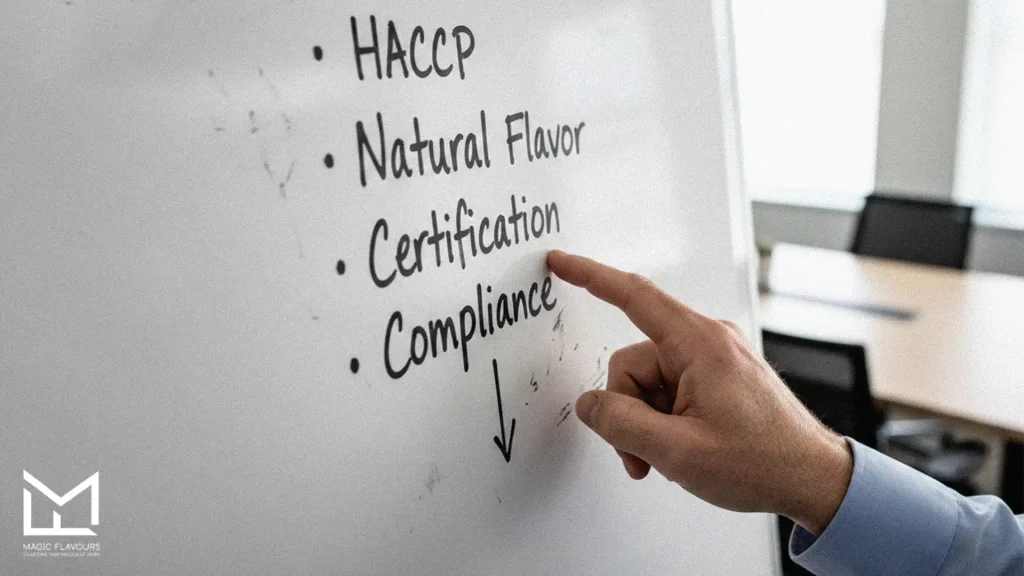
Food grade flavor certification is essential for global safety, trust, and market access. In particular, it ensures compliance with standards such as ISO 22000 versus HACCP, as well as natural flavor certification rules.
Moreover, obtaining certification strengthens brand credibility and significantly reduces operational risks. As a result, certified suppliers gain strong buyer preference, secure long-term contracts, and lower liability exposure.
Furthermore, as the industry continues to evolve, integrating clean label standards and AI-powered compliance tools is becoming increasingly vital. Therefore, staying proactive in certification helps manufacturers remain both competitive and fully compliant on a worldwide scale.
Ultimately, achieving and maintaining food grade flavor certification requires dedication, careful planning, and continuous monitoring. Consequently, companies that invest in it position themselves as true leaders in safety, quality, and innovation.
 English
 Arabic
 Turkish
 Persian