

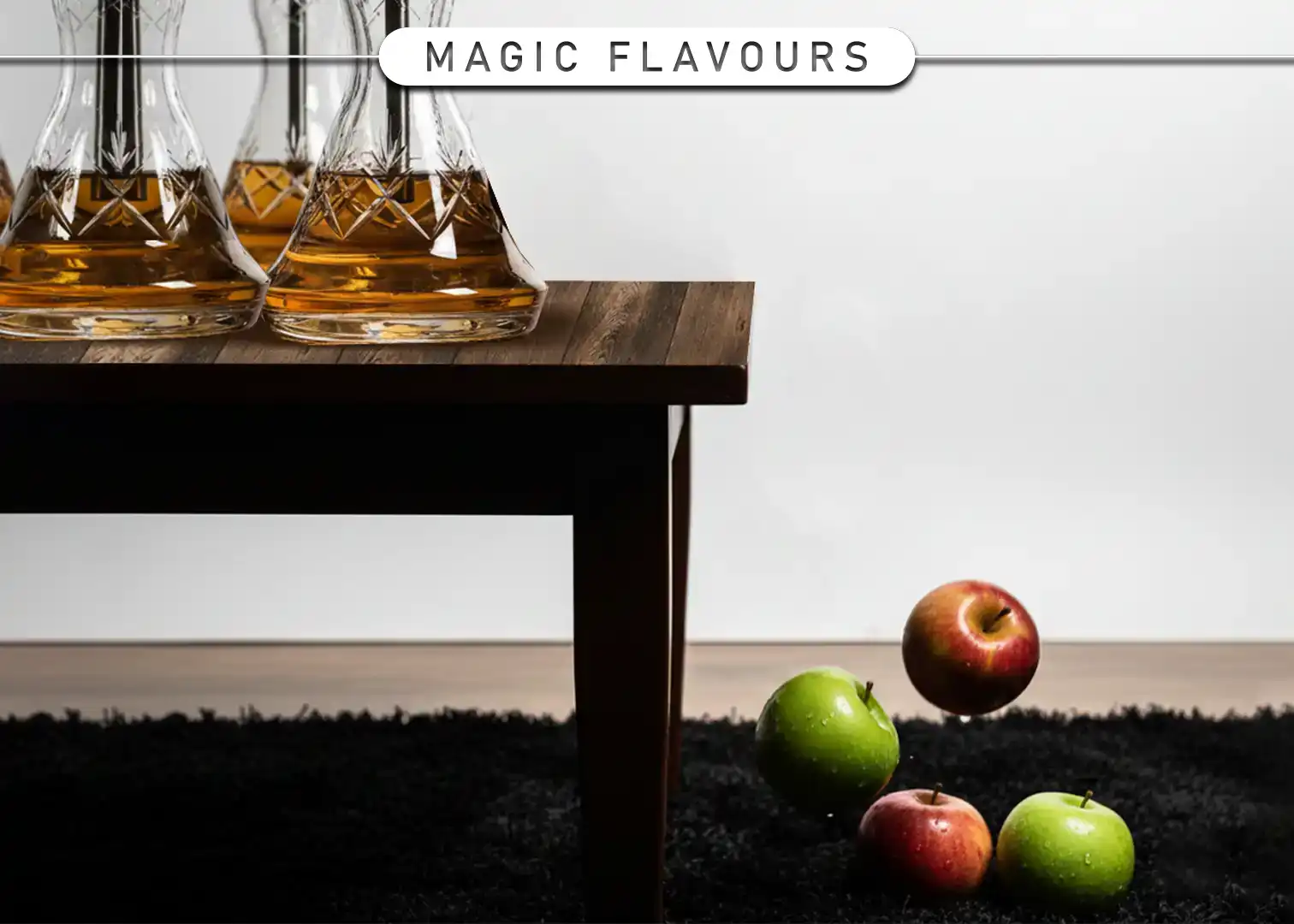
1. Molecular Composition of Double Apple Flavor
Key Esters, Terpenes, and Phenolic Compounds

Double Apple flavor profile relies on a strategic blend of esters, terpenes, and phenolic compounds. These molecules shape aroma, taste, and persistence. Esters like ethyl 2-methylbutyrate and hexyl acetate provide fruity top notes with crisp, green apple character.
Meanwhile, terpenes contribute depth and spice. Limonene and pinene, often present in apple extracts, add brightness and lift. These compounds enhance volatility and freshness. Phenolic elements, though less dominant, stabilize the blend and add subtle bitterness.
Together, these molecules create a layered experience. Esters deliver sweetness, terpenes add complexity, and phenolics ground the flavor. This balance ensures sensory richness and thermal resilience.
Discover the range of Hookah flavors we offer!
Role of Anethole, Ethyl Acetate, and Hexyl Hexanoate
Three compounds define Double Apple’s signature: anethole, ethyl acetate, and hexyl hexanoate. Each plays a distinct sensory role. Anethole, derived from anise, provides the bold licorice-like backbone. It’s spicy, earthy, and slightly bitter.
Ethyl acetate adds brightness. It’s volatile and fruity, contributing to the initial apple burst. Its high evaporation rate makes it ideal for top-note delivery. Hexyl hexanoate, in contrast, offers roundness and body. It deepens the apple profile with creamy, sweet undertones.
These compounds work in synergy. Anethole anchors the flavor, ethyl acetate lifts it, and hexyl hexanoate smooths transitions. Their combined effect creates the iconic Double Apple Flavor experience.
2. Thermal Stability and Heat Behavior of Double Apple Flavor
Volatile Compound Resilience Under Indirect Heat
Double Apple flavor is engineered for indirect heat exposure. Unlike food flavors, shisha blends must endure prolonged thermal stress. Volatile compounds like anethole and hexyl hexanoate resist breakdown under moderate heat conditions.
This resilience ensures consistent aroma release. As heat activates the blend, stable volatiles evaporate gradually, maintaining flavor integrity. In contrast, unstable compounds degrade quickly, causing off-notes or aroma loss.
Moreover, the formulation minimizes volatility imbalance. By selecting thermally robust molecules, manufacturers preserve the flavor’s core identity. This strategy supports long sessions without sensory fatigue.
Flavor Degradation vs. Retention During Long Sessions

During extended smoking, flavor retention becomes critical. Double Apple Flavor maintains its profile longer than many modern blends. Its balanced composition slows degradation and supports sustained aroma delivery.
Heat accelerates molecular breakdown. However, Double Apple’s key compounds degrade slowly, preserving taste and mouthfeel. This stability enhances user satisfaction and reinforces brand loyalty.
In contrast, experimental blends often lose clarity. Their volatile top notes fade quickly, leaving sweetness or bitterness. Double Apple Flavor avoids this pitfall through careful thermal design and ingredient selection.
3. Base Formulation and Carrier Matrix
Glycerol vs. Propylene Glycol: Smoke Density and Flavor Release
Glycerol and propylene glycol are the two primary humectants in shisha formulations. Each affects smoke and flavor differently. Glycerol produces thick, voluminous clouds. It retains moisture well and contributes to a smooth mouthfeel.
In contrast, propylene glycol enhances flavor volatility. It carries aroma compounds more efficiently but produces thinner smoke. Its lower viscosity also affects heat distribution. Many blends use both to balance visual and sensory performance.
The ratio between these two compounds is critical. Too much glycerol can mute flavor. Too much glycol can dry the blend. A well-calibrated base ensures both dense smoke and effective flavor release.
Sugar Types and Their Impact on Mouthfeel

Sugars influence sweetness, texture, and burn behavior. Common options include molasses, honey, glucose syrup, and invert sugar. Each offers distinct functional properties. Molasses adds depth and color, while glucose syrup enhances smoothness.
Invert sugar provides rapid sweetness perception. It also helps retain moisture during storage. However, excessive sugar can lead to caramelization and harshness under heat. Therefore, balance is essential.
Mouthfeel depends on sugar viscosity and thermal behavior. Thicker syrups create a richer, more rounded sensation. Lighter sugars may feel sharper or drier. Selecting the right sugar type shapes the overall sensory experience.
4. Sensory Profile and Balance of Double Apple Flavor
Sweet–Spicy–Bitter Dynamics
Double Apple’s appeal lies in its layered sensory structure. The flavor balances sweetness, spice, and bitterness with precision. Sweet apple esters provide immediate comfort and familiarity. They create a soft entry point for the palate.
Spicy notes from anethole introduce tension. This contrast adds complexity and prevents the flavor from feeling flat. Bitterness, though subtle, grounds the experience. It adds depth and keeps sweetness in check.
Together, these elements form a dynamic flavor arc. The sweet–spicy–bitter interplay sustains interest and enhances emotional engagement. This balance is key to Double Apple’s enduring popularity.
Preventing Flavor Fatigue Through Contrast
Flavor fatigue occurs when sensory input becomes monotonous. Double Apple Flavor avoids this through contrast and progression. Its sweetness is balanced by spice, which refreshes the palate.
The bitter undertone adds structure. It prevents cloying buildup and resets sensory perception. This makes the flavor suitable for long sessions. Users remain engaged without feeling overwhelmed.
Additionally, the alternating notes create rhythm. Each puff offers variation, not repetition. This rhythmic contrast keeps the experience fresh and emotionally resonant. It’s a technical strategy with psychological impact.
ℹ️ Want to dive deeper? Check out our detailed article on this topic:
5. Double Apple Flavor Performance Across Shisha Formats
Tobacco-Based vs. Herbal vs. Nicotine-Free Substrates
Double Apple Flavor performs well across multiple substrate types. In tobacco-based blends, it binds easily to the leaf’s natural oils. This enhances depth and persistence. The tobacco base also complements the anise note, adding earthy undertones.
In herbal formats, flavor delivery depends on moisture and porosity. Double Apple Flavor adapts well, though intensity may vary. Herbal substrates lack nicotine, which slightly alters mouthfeel and perceived richness.
Nicotine-free versions often use cellulose or tea leaves. These bases are neutral, allowing the flavor to dominate. However, they may require higher flavor loading to match traditional impact. Despite these differences, Double Apple Flavor remains recognizable.
Flavor Consistency Across Product Categories
Maintaining consistency across formats is a technical challenge. Double Apple flavor succeeds by relying on thermally stable compounds. These molecules behave predictably across substrates and heating methods.
Flavor carriers like triacetin and ethanol help standardize release. They ensure aroma diffusion regardless of base material. This supports brand consistency and consumer trust.
Moreover, sensory calibration plays a role. Manufacturers adjust ratios to match expected intensity. Through controlled formulation, Double Apple flavor delivers a familiar experience—whether tobacco-based or herbal, premium or budget.
6. Packaging, Shelf-Life, and Volatile Preservation
Impact of Oxygen, Light, and Material Type
Packaging directly affects flavor stability. Exposure to oxygen leads to oxidation, which degrades volatile compounds and alters aroma. Even minimal air intrusion matters. Over time, oxidized molecules lose intensity and develop off-notes.
Light also accelerates degradation. UV exposure breaks down sensitive esters and terpenes. This process reduces freshness and shortens shelf-life. Therefore, opaque packaging is essential for preserving aroma integrity.
Material type plays a critical role. Aluminum pouches offer excellent barrier protection. In contrast, thin plastics allow vapor loss. Multi-layer laminates with foil and polymer layers provide optimal preservation. These choices impact product quality and consumer satisfaction.
Best Practices for Aroma Retention

To retain aroma, manufacturers must control environmental exposure. Airtight sealing prevents oxygen ingress and moisture loss. Vacuum packing or nitrogen flushing further protects volatile compounds.
Temperature control is equally important. Storing products below 25°C slows chemical reactions and maintains flavor stability. Avoiding heat spikes during transport is crucial. Consistent cold-chain logistics improve shelf-life.
Finally, choosing the right container matters. Resealable, multi-layer pouches with low oxygen transmission rates are ideal. These packaging strategies ensure that Double Apple flavor retains its signature aroma from factory to consumer.
7. Double Apple Flavor in Blending and Layering
Compatibility with Mint, Cinnamon, and Tropical Fruits

Double Apple flavor blends well with selects flavors. Mint is the most common pairing. It adds freshness without overpowering the apple–anise base. The cooling effect of mint complements the warmth of anethole, creating a balanced contrast.
Cinnamon introduces spice and depth. When used sparingly, it enhances the earthy notes of anise. However, excessive cinnamon can dominate the blend. Proper calibration ensures harmony and preserves the original character.
Tropical fruits offer brightness and novelty. Mango, pineapple, or passionfruit can lift the apple notes. These additions work best when layered gently. They should accent, not compete with, the core flavor.
Risks of Imbalance and Successful Pairings of Double Apple Flavor
Blending carries risks. Overloading sweet or acidic flavors can disrupt Double Apple’s structure. The anise note may clash with citrus or berry profiles. This creates sensory confusion and reduces clarity.
Successful pairings respect the flavor’s architecture. Supporting notes should enhance, not mask, the apple–anise interplay. Mint and cinnamon succeed because they reinforce contrast. They add dimension without distortion.
Layering requires restraint. Each addition must serve a purpose. When done correctly, blending elevates Double Apple flavor. It becomes more complex, more expressive, and more memorable—without losing its identity.
8. Regulatory Considerations and Labeling Challenges of Double Apple Flavor
Natural vs. Artificial Double Apple Flavor Classification
Classifying Double Apple Flavor as natural or artificial depends on its source materials. Regulatory bodies define “natural” based on origin, not perception. If apple and anise components are derived from plant extracts, they may qualify as natural.
However, many flavor houses use synthesized molecules. For example, anethole is often produced via chemical synthesis. This shifts classification toward artificial. Even if the taste mimics nature, the label must reflect production method.
Labeling must follow jurisdictional rules. In the EU, “natural flavoring” requires 95% natural origin. In the US, FDA standards are broader. MENA markets vary, often aligning with local halal and purity standards. Mislabeling can lead to compliance issues.
Compliance Across EU, US, and MENA Markets
Each region enforces distinct flavor regulations. The EU requires full traceability and strict definitions for natural claims. Additives must be declared clearly. REACH and EFSA guidelines govern safety and labeling.
In the US, the FDA allows broader use of “natural” if the flavor is derived from natural sources. However, transparency is key. Flavor houses must disclose solvents, carriers, and synthetic components when required.
MENA markets prioritize halal compliance and consumer trust. Labeling must avoid ambiguity, especially around alcohol-based solvents. Some countries require local certification. To succeed globally, Double Apple flavor must adapt its labeling to each market’s expectations and legal framework.
9. Consumer Sensory Expectations and Quality Benchmarks
What Defines a “Good” Double Apple Flavor
A good Double Apple flavor delivers balance, clarity, and persistence. Consumers expect a recognizable apple–anise profile with no off-notes. The apple component should feel crisp and sweet, without artificial sharpness. Anise must be bold but not overpowering.
Mouthfeel also matters. The smoke should be smooth, dense, and free of harshness. Bitterness must be subtle, not dominant. A lingering aftertaste is desirable, especially if it mirrors the initial flavor arc.
Consistency across sessions is key. A good blend performs the same under different heat setups. This reliability builds trust and brand loyalty. Ultimately, quality is defined by sensory harmony and emotional resonance.
Sensory Testing Protocols and Industry Standards of Double Apple Flavor
Professional flavor testing typically follows structured protocols. For example, triangle tests, paired comparisons, and descriptive analysis are common methods. Together, these tools help identify flavor clarity, balance, and potential defects across multiple samples. In addition, trained panels systematically evaluate aroma, taste, mouthfeel, and aftertaste to ensure product consistency and quality.
Benchmarking is also essential. Double Apple flavor samples are compared against gold-standard references. These references define ideal intensity, sweetness, and spice levels. Deviations are flagged for reformulation or quality control.
Industry standards vary by region. However, ISO 13299 and ASTM E253 are widely used in sensory science. These frameworks ensure repeatability and objectivity. By aligning with such standards, producers maintain consistency and meet consumer expectations.
10. Double Apple Flavor Composition: The Core Ingredients
Apple (red and green): sweetness, tartness, freshness
Red and green apples form the foundation of Double Apple flavor. Red apples contribute sweetness, warmth, and familiarity. Meanwhile, green apples add tartness and freshness, creating a lively balance. Together, they establish the recognizable duality that defines this classic taste.
The combination also enhances sensory appeal. Sweetness soothes the palate, while tartness adds excitement. This contrast engages the brain and maintains interest in every puff. Carefully balancing both ensures that no note dominates or feels flat.
Furthermore, apples act as the base for layering other notes. Their clarity allows additional aromas like anise or woody undertones to shine. This makes the flavor both approachable and complex, appealing to beginners and experts alike.
Anise: signature licorice aroma, defining note

Anise is the defining element of Double Apple flavor. Its subtle licorice aroma complements the apples perfectly. Without anise, the flavor would lose its iconic identity and feel incomplete.
It also provides depth and complexity. The licorice note interacts with sweet and tart elements, creating a harmonious blend. This interaction gives Double Apple flavor its signature aroma and keeps the flavor memorable.
Moreover, anise ensures consistency across sessions. Its presence acts as an anchor, maintaining the classic profile even when subtle tweaks or new ingredients are added. This makes it indispensable to the recipe.
Optional notes: woody, spicy, or floral undertones to add depth
Optional undertones enhance the profile without overpowering it. Woody, spicy, or floral notes introduce subtle depth and richness. They support the primary apple-anise combination and increase sensory complexity.
These modifiers also improve mouthfeel and aroma persistence. For example, a hint of spice can create warmth, while floral notes soften the smoke. Careful use ensures the flavor remains balanced and true to the original.
Finally, optional notes allow for gentle innovation. Developers can tailor the flavor to modern preferences while keeping the classic essence intact. This maintains relevance across markets and generations.
11. Balancing Sweetness, Tartness, and Aromatic Notes of Double Apple Flavor
Techniques to ensure apple and anise don’t overpower each other
Balancing apple and anise requires careful measurement. Too much anise can dominate, while too little feels flat. Red and green apples must also complement each other without clashing.
Developers often adjust timing and proportion during blending. Layering flavors gradually ensures smooth integration. This technique creates a harmonious profile where each element is perceptible.
Additionally, sensory testing helps maintain equilibrium. Expert tasters evaluate the balance and provide adjustments. This process ensures consistency and preserves the signature Double Apple flavor identity.
Adjusting intensity for consistency across batches
Consistency is key in professional flavor production. Each batch must replicate the intended sweetness, tartness, and aroma. Minor variations in ingredient quality can alter the profile, so precise calibration is required.
Flavorists often use small test batches to fine-tune intensity. Adjustments in apple ratios or anise concentration maintain uniformity. This practice ensures that consumers experience the same classic taste every time.
Moreover, documentation of recipes and process parameters supports reproducibility. Tracking proportions, temperature, and mixing times reduces deviations and guarantees reliable output.
Use of supporting modifiers to enhance mouthfeel and aroma persistence
Supporting modifiers improve the overall sensory experience. Woody, spicy, or floral notes can enhance body, smoothness, and aroma longevity. They complement the main apple-anise blend without overpowering it.
Modifiers also help control smoke texture. Subtle adjustments in glycerin, molasses, or aroma boosters affect how flavor releases during smoking. This creates a more satisfying session.
Finally, modifiers allow innovation while respecting tradition. Developers can enhance sensory impact and modernize the flavor subtly. The key is maintaining the recognizable essence of Double Apple flavor.
12. Double Apple Flavor Chemistry and Sensory Interaction
How volatile compounds in apple and anise interact
Double Apple’s aroma depends on volatile compounds in apples and anise. These molecules evaporate during smoking, releasing complex scents. Red and green apple compounds provide sweetness and tartness, while anise adds licorice depth.
The interaction between these compounds creates a layered effect. Sweet, tart, and aromatic molecules influence each other’s perception. This synergy ensures no single note dominates the overall experience.
Additionally, these compounds are sensitive to heat and moisture. Developers carefully control conditions to preserve their integrity. This guarantees the classic aroma and flavor consistency across batches.
Aroma–taste synergy: why the brain perceives it as balanced and appealing
The brain processes flavor through both taste and smell. In Double Apple flavor, sweetness, tartness, and anise aroma interact in the brain to create perceived balance. This synergy enhances enjoyment and satisfaction.
Sweet and tart signals complement each other, while aroma amplifies perception of depth. This combination engages multiple senses, making the flavor feel harmonious and complete.
Moreover, aroma–taste synergy strengthens memory association. The classic profile becomes instantly recognizable, reinforcing emotional and sensory pleasure with each puff.
Role of olfactory cues in enhancing sweetness or freshness perception
Olfactory cues strongly influence how sweetness and freshness are perceived. The smell of red apple enhances perceived sweetness, while green apple aroma boosts tart freshness.
Anise aroma also interacts with these cues, giving the flavor complexity and dimension. Consumers often report that smell shapes their anticipation and satisfaction before tasting.
Finally, controlling olfactory perception is key in product development. Proper aroma balance ensures the flavor is vivid, lasting, and emotionally appealing while remaining true to Double Apple’s signature profile.
13. Smoke Behavior and Delivery of Double Apple Flavor
How Double Apple Flavor compounds react to heat and humidity during smoking
Compounds in Double Apple Flavor are sensitive to heat and moisture. High temperatures can degrade delicate apple or anise molecules. Conversely, insufficient heat may prevent full aroma release.
Humidity also affects smoke perception. Moist tobacco slows evaporation, enhancing smoothness but reducing intensity. Dry conditions can make flavors sharp or fleeting.
Developers carefully balance these factors. Controlling smoking conditions ensures it remains consistent, full-bodied, and true to the classic Double Apple flavor.
Ensuring smoothness, avoiding harshness, and maintaining consistency
Smoothness is key to a pleasurable hookah session. Too much anise or over-roasted tobacco can create harshness. Proper mixing and heat management prevent this issue.
Consistency is equally important. Each session should provide the same aromatic depth and mouthfeel. Sensory testing helps confirm smoothness and flavor stability.
Additionally, the balance between apple sweetness and tartness contributes to overall comfort. Maintaining this harmony ensures a familiar and enjoyable experience for consumers.
Impact of glycerin, molasses, or carrier choice on flavor release
Glycerin and molasses act as carriers, influencing smoke density and flavor diffusion. High glycerin enhances smooth, thick smoke while supporting aroma persistence.
Molasses significantly impacts sweetness perception. Moreover, it helps flavors blend evenly across the shisha matrix. In addition, the choice of carrier affects how quickly compounds volatilize and reach the smoker’s palate. By optimizing these ingredients, producers ensure that apple, anise, and optional notes release gradually and consistently. As a result, this delivers a rich, balanced, and lasting Double Apple flavor experience every time.
ℹ️ Recommended next read:
Double Apple Shisha Flavor: How One Flavor Anchors the Industry
14. Innovation While Preserving the Classic
Adding subtle notes (mint, berry, citrus) without losing the iconic profile
Flavor developers carefully introduce subtle notes like mint, berry, or citrus. These additions refresh the profile while preserving its identity.
The key is balance. Overpowering the apple-anise base can mask the classic character. Gentle integration allows the new note to enhance without dominating.
Moreover, subtle modifiers can attract younger consumers. They offer novelty while maintaining recognition among traditional enthusiasts. This approach respects both heritage and modern tastes.
Adjusting flavor for different markets while respecting consumer expectations
Different regions prefer distinct flavor intensities. Some markets favor stronger sweetness, while others prefer lighter, fresher notes. Developers adjust ratios accordingly.
Maintaining the core Double Apple flavor identity is essential. Even with tweaks, the signature apple-anise balance must remain intact.
Additionally, consumer feedback guides innovation. Sensory panels and market research ensure modifications satisfy local preferences without compromising authenticity.
Techniques to modernize aroma intensity, mouthfeel, or smoke density

Developers use technical strategies to enhance aroma intensity. Optimizing volatile compound ratios improves scent projection during smoking.
Mouthfeel adjustments ensure smoothness and satisfying texture. Modifying glycerin, molasses, or particle size affects smoke density and flavor release.
These modernizations maintain classic characteristics while enhancing user experience. Consumers enjoy a familiar profile with improved sensory richness and consistency.
15. Quality Control and Consistency of Double Apple Flavor
Reproducibility across batches
Ensuring reproducibility is absolutely critical in Double Apple flavor production. Therefore, each batch must deliver the same apple–anise balance and aroma. To achieve this, developers standardize ingredient ratios and mixing techniques across all production runs. Moreover, precise measurements significantly reduce variability between batches and help maintain consistent sensory performance.
Moreover, documenting every step in production helps maintain consistency. This allows manufacturers to replicate the flavor across time and locations reliably.
Sensory panels and chemical analysis to maintain signature flavor
Sensory panels systematically evaluate aroma, taste, and smoke quality. In addition, experts detect subtle variations in sweetness, tartness, and anise intensity. Meanwhile, chemical analysis complements human testing. Specifically, it identifies volatile compounds and ensures concentrations match the classic profile. By combining sensory and chemical methods, producers ensure each batch preserves Double Apple’s signature identity. As a result, this guarantees a consistent consumer experience.
Stability testing for shelf life and aroma retention
Stability testing systematically measures how flavor changes over time under various environmental conditions. To achieve this, developers test aroma, sweetness, and tartness across different storage temperatures and durations. As a result, this process ensures the product retains its characteristic profile throughout its intended shelf life. It also identifies potential degradation in volatile compounds. By monitoring stability, manufacturers deliver Double Apple flavor that maintains its iconic taste and aroma from production to consumption.
What’s your taste?
How do you like your Double Apple?Bold and spicy? Smooth and sweet? Or with a crisp, tart twist?
Share your perfect blend in the comments!
 English
 Arabic
 Turkish
 Persian