

When developing shisha flavors, cooling often looks like a simple variable: pick an ingredient, adjust the dose, and move on. In practice, it is rarely that simple. The real challenge is not creating a strong cooling sensation — it is making sure that sensation works with the flavor instead of against it.
Choosing the right cooling agent for shisha depends on what the finished product needs to deliver: an immediate ice effect, a subtle background freshness, a defined mint character, or cooling that holds steady across a full session. Each goal calls for a different approach, and the cooling material itself is only one part of the equation.
Cooling Intensity Is Not the Same as Product Quality
A common formulation mistake is chasing cooling intensity instead of the overall sensory experience. A stronger effect can feel powerful in the first few minutes, but that does not guarantee good performance across a full session. As cooling increases, it can start to mask sweetness, aroma, and subtle top notes.
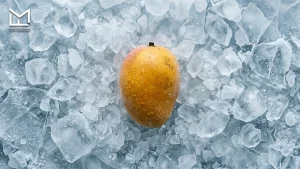
Take Mango Ice as an example: push the cooling too far, and consumers taste the ice more than the mango. In Berry Mix, excessive cooling can blur the difference between individual berry notes. The goal is not maximum cooling — it is the right balance between cooling and flavor.
How Cooling Agents Work in Shisha Flavors
Cooling agents create a sensation of cold by activating TRPM8, a temperature-sensitive receptor in sensory neurons. Menthol is a well-known activator, and several synthetic materials work the same way.
TRPM8 activity alone does not predict real-world performance, though. Concentration, the flavor matrix, and exposure time all shape how consumers ultimately perceive the cooling. That shifts the real R&D question from ingredient strength to formulation behavior.
Menthol vs. Neutral Cooling Agents
Menthol delivers two things at once: cooling and a recognizable mint character. That makes it valuable when mint is part of the intended identity — Grape Mint, for example, or traditional Double Apple profiles where a mint-associated note is expected.
Neutral cooling agents make more sense when the product needs cold without tasting like mint — think Mango Ice, Berry Ice, or Cola Ice. Neither option is inherently better; the right choice depends on what the flavor is designed to deliver.
WS-23 for Ice Flavors

WS-23 is a common cooling agent for shisha ice profiles because it delivers noticeable cold without the mint character of menthol. In Mango Ice, it can create the impression of chilled fruit without introducing mint — a good example of “mango first, cooling second.”
WS-23 should not be treated simply as a stronger menthol replacement — its sensory behavior is different, and results depend on concentration and formulation context. The goal is transparency: cooling that supports the flavor rather than replacing it.
WS-3 and Alternative Cooling Profiles
Not every formulation needs a prominent cooling effect. In creamy, dessert-style, or delicate tobacco profiles, WS-3 can offer a softer, more background cooling character.
Reducing the comparison to “WS-23 = strong, WS-3 = weak” oversimplifies real formulation work. Compare cooling materials by onset, intensity, persistence, flavor interaction, and performance throughout the session.
How to Match Cooling to the Flavor Profile
Selecting a cooling agent for shisha only makes sense in the context of the flavor system it supports. A tropical mango, a layered berry mix, and a mint-led Grape Mint all call for different cooling strategies:
| Flavor Profile | Cooling Direction | R&D Consideration |
|---|---|---|
| Mango Ice | Neutral cooling | Preserve mango identity |
| Berry Mix | Controlled cooling | Maintain berry differentiation |
| Grape Mint | Menthol | Balance grape & mint |
| Double Apple | Balanced / mint-associated | Preserve traditional profile |
| Dessert / Cream | Softer cooling | Avoid disrupting creaminess |
| Beverage | Clean cooling | Increase refreshment |
These are starting directions rather than fixed rules. The final outcome always depends on the complete formulation.
Design the Cooling Curve, Not Just the Cooling Level
Consumers do not experience cooling at one fixed moment — they experience a curve: initial impact, flavor development, peak cooling, sustained cooling, and late-session perception.
Two Mango Ice prototypes illustrate why this matters. Prototype A delivers strong cooling immediately and wins a quick taste test. Prototype B builds more gradually, keeping mango recognition stronger as the session continues — and often gives the more coherent experience overall.
How to Evaluate Cooling Performance
Evaluating cooling in a single sitting misses how it behaves over time. A more reliable approach tracks performance at defined stages:
| Evaluation Stage | What to Observe |
|---|---|
| Early session | Cooling onset, first impression |
| Mid session | Flavor recognition, cooling balance |
| Late session | Flavor retention, sensory fatigue |
| Overall | Session consistency, acceptability |
This kind of testing often reveals a key point: a formulation can score well on cooling and still be a poor product if it suppresses flavor identity. Sensory data, not ingredient specs alone, should guide the final decision.
Technical Performance vs. Consumer Preference
An R&D panel may favor a sharply defined cooling effect because differences are easy to detect. Consumers often prefer cooling that feels more integrated and less obvious, and expectations vary by region and category.
Detecting a difference and knowing whether consumers prefer it are two separate questions — the final target should balance technical performance, sensory architecture, and consumer expectation.
A Practical Framework for Choosing a Cooling Agent for Shisha
The strongest cooling agent isn’t always the right one. What matters is whether the cooling system solves this specific product’s sensory problem. Before choosing a cooling agent for shisha, define the target:
- What is the core flavor identity?
- Should cooling be part of the flavor, or stay neutral?
- How quickly should it emerge, and how should it develop through the session?
- How much sensory fatigue is acceptable?
- What does the target consumer expect from this category?
Menthol fits when mint is part of the identity; a neutral cooling agent fits when the goal is preserving a fruit or beverage profile. Ingredient selection should follow the sensory target, not replace it.
Final Thoughts
Shisha flavor development is not about making products colder — it is about making cooling more controlled, predictable, and compatible with the flavor architecture. The right cooling agent for shisha is not the one with the strongest first impression, but the one that preserves flavor identity and holds a coherent sensory trajectory from first draw to last.
 English
 Arabic
 Turkish
 Persian