

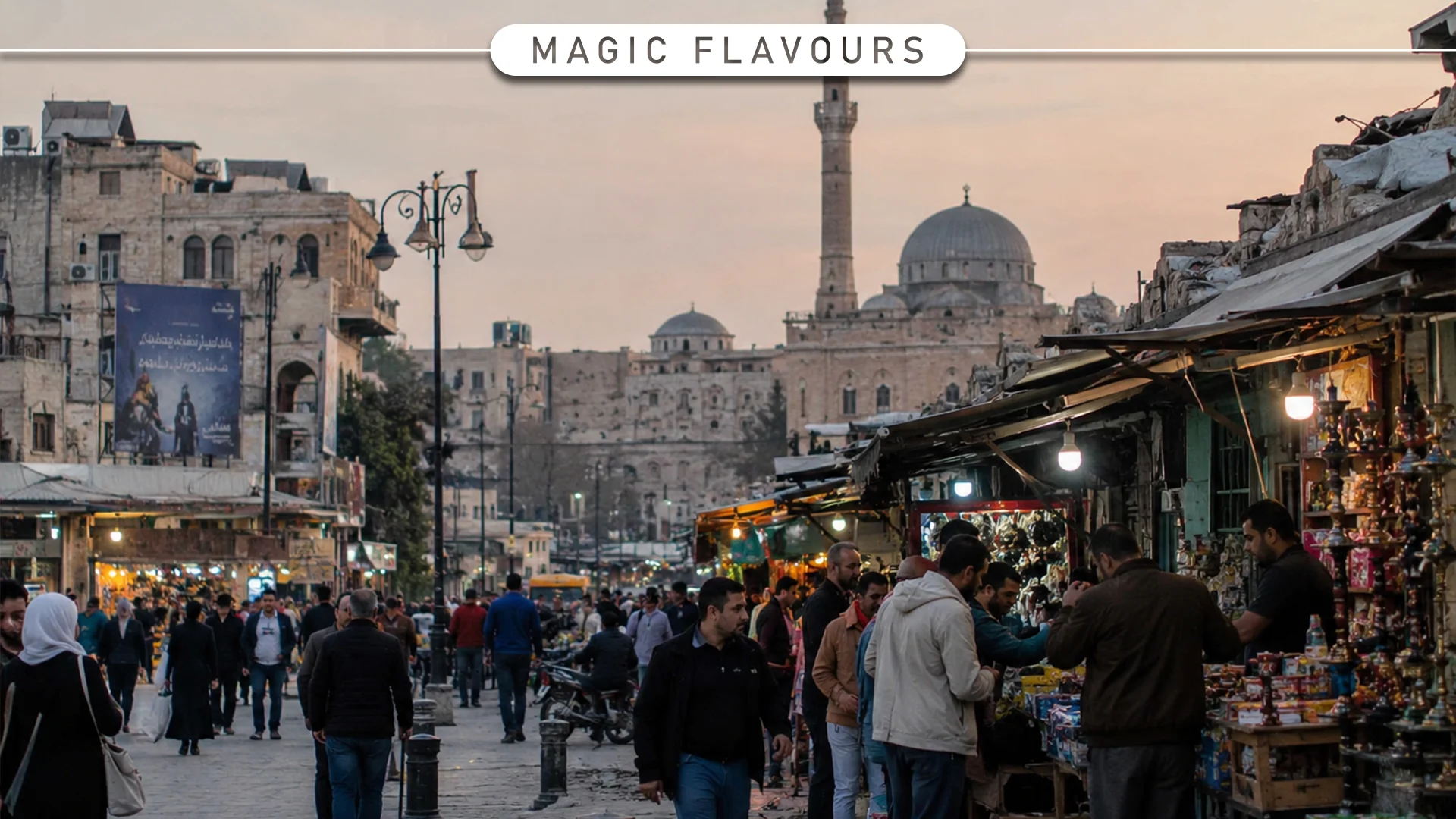
Syria replaced its customs law and tariff schedule in 2026, so a landed-cost estimate from last year may already be wrong. If you plan to enter the shisha market in Syria, check the data, the rules and your partners first. This guide shows what public sources confirm, where they stop, and what you need to verify yourself.
This article uses public online sources. It does not include original fieldwork.
What We Know About the Shisha Market in Syria
Public data is limited. This table lists the figures we could verify.
| Data point | Year | Source | Limit |
| Syria imported $50.8M of tobacco and substitutes | 2024 | OEC | Includes cigarettes; not a shisha figure |
| Syria took about $14M of Egypt’s shisha tobacco exports (11%) | 2024 | Egypt’s Food Export Council, via Daily News Egypt | Exporter-side data; one origin country |
| Egypt’s tobacco exports to Syria: $12.84M | 2024 | UN Comtrade via Trading Economics | Covers all tobacco, not only shisha |
| Syrian-made shisha tobacco sold abroad | 2016 | Enab Baladi | Old context only |
Figures appear as the named sources published them. We did not verify them independently.
The two Egyptian figures do not match, and we could not find the reason. This article does not combine them.
They show that Syrian buyers import finished shisha tobacco from Egypt. They do not show total demand, local production or profit margins. We found no current public data on local shisha production.
Shisha Tobacco Flavors and Packaging in Syria
We found no reliable Syria-specific data on which flavors or pack sizes sell. Do not assume any flavor leads the market.

Export listings for shisha tobacco commonly show fruit, mint, spice and gum flavors, in 50 g, 250 g and 1 kg packs. That describes the wider export trade, not Syria.
To build an assortment, collect your own evidence:
- Photograph retail shelves in the cities you plan to serve.
- Ask wholesalers which pack sizes move fastest.
- Compare price tiers.
- Check that sample batches taste the same.
How Shisha Tobacco Distribution Works in Syria
Public sources do not describe Syria’s shisha channels, so treat the chain below as a likely pattern, not a proven structure.
Shisha tobacco usually moves from a manufacturer or importer to a distributor, then to wholesalers, then to shops and hospitality venues. Syria may work differently by city.
Two points are documented. Syria’s tobacco control decree covers water-pipes and penalizes sale without the required license. Import and export work also requires registration: a valid commercial or industrial registration, registration with customs, and in some cases approval from a sector authority (US Embassy handbook, May 2026).
Ask each potential partner for their licenses, tax clearance, warehouse details and references.
What Distributors Should Evaluate Before Entering the Market
| Factor | How to check | Why it matters |
| Customers and demand | Visit venues and shops; interview wholesalers | Public data cannot size demand |
| Competing products | Map prices, pack sizes and flavors on shelves | Shows where a gap exists |
| Distribution partners | Request licenses, references and warehouse details | A weak partner can hold your stock |
| Supplier reliability | Order samples, then a trial batch | Supply gaps lose shelf space |
| Quality consistency | Compare batches against a reference sample | Buyers notice drift |
| Landed cost | Use the current tariff, taxes, freight and insurance | 2026 changes make old estimates unreliable |
| Counterparty and payment terms | Verify the buyer; agree terms with your bank | Reduces the risk of unpaid or disputed shipments |
| Logistics | Confirm routes and transit times with a forwarder | Delays raise cost and can spoil product |
| Licensing | Confirm with the authorities and a local adviser | Rules changed this year |
Choosing the Right Shisha Flavor Supplier
If you make or private-label shisha tobacco, the flavor decides whether a batch tastes the same next month. Judge a supplier on these points:
- Batch consistency: Ask for evidence that strength and profile stay stable.
- Reference matching: Can the supplier match your sample and refine it?
- Custom development: How many refinement rounds are included, and how long does each take?
- Documentation: Request technical documents and the quality certifications your market needs.
- Minimums and samples: Compare order minimums and sample terms.
- Capacity: Ask how the supplier handles demand spikes and raw-material shortages.
- Terms: Get pricing, lead times and responsibilities in writing.
Request samples first. The first exchange shows how fast the supplier replies and how closely it follows your brief.
Import Rules, Logistics, and Commercial Risks

Confirm each rule below against a current official source before you ship.
General trade rules
- Decree 109/2026 created a new customs law with 264 articles and replaced the 2006 law. Implementing regulations were still pending when GTAI reported on it.
- A harmonized tariff has applied to all imports since 1 June 2026. Decree 188/2026 amended some items in October.
- Finance ministry decisions in March require importers to show financial clearance and add a 2% income-tax advance on import value (Enab Baladi).
- Trade registration now runs through the Ministry of Economy and Industry, created in March 2025 by merging three ministries. Confirm which office handles your import license.
- The new law raises penalties for violations (GTAI).
Tobacco-specific rules: The tobacco decree covers water-pipes and bans advertising and loose sales. We could not verify the current shisha duty rate, product registration rules or labeling rules.
Sanctions and payments (status as of August 2026): The US advisory of 24 August 2026 says Congress repealed the Caesar Act and the US ended its comprehensive Syria sanctions. Targeted sanctions remain. Analysts note that banks still run strict due diligence on Syria transfers. Legal change does not guarantee that a payment or shipment will clear, so confirm routes and payment channels with your bank and forwarder first.
Trade rules, tariffs and sanctions on Syria changed several times in 2026. This section reflects public sources as of October 2026 and is not legal or customs advice. Confirm current requirements with the Syrian authorities and a qualified local adviser before you ship.
Conclusion
The shisha market in Syria has real import activity, but public data cannot size demand, growth or profit. Syria’s 2026 rule changes add another reason to verify costs and licenses before you commit stock.
If you make shisha tobacco and want a flavor partner, Magic Flavours supplies B2B flavor concentrates, including refinement and custom flavor development. Contact the team to discuss your project. [Reach Us]
 English
 Arabic
 Turkish
 Persian